
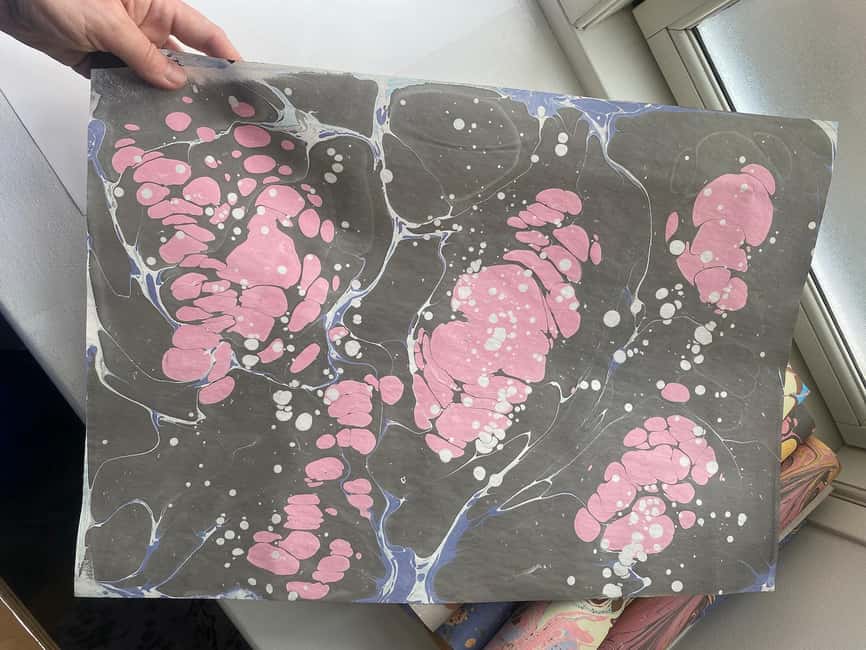
Reviewed · WORKSHOPS
Copenhagen (2-Hour Paper Marbling Workshop with Goda)
Paper marbling in Copenhagen feels oddly calming. At BLADR in Nørrebro, you learn paper marbling techniques from the floating size to the first lifted print.
I love that you leave with a real, frameable souvenir. I also love the small-group studio vibe run by Goda.
The main thing to plan around is drying time, so book it with enough days before you fly.
In This Review
- Key highlights if you like making things (not just watching)
- A hands-on Copenhagen souvenir that actually looks like art
- Where BLADR and Nørrebro set the right tone
- How paper marbling works: size, carrageenan, and the big surprise
- The technique’s long journey, explained without the lecture
- What happens during the 150 minutes (and why the pacing feels right)
- 1) Setup and demonstration
- 2) Learning the gestures and tools
- 3) Making your own prints
- 4) Tea and coffee while the work dries
- Taking your marbled papers home: drying is the real planning point
- Price and value: what you get for $110
- Who this workshop suits best (and who might want another option)
- A few logistics you should know before you go
- Should you book the Copenhagen paper marbling workshop at BLADR?
- FAQ
- Where is the workshop located?
- How long is the paper marbling workshop?
- What does the workshop cost?
- What is the group size?
- What languages are offered?
- Are materials included?
- What do I make during the workshop?
- Is print shipping included?
- Is there help with drying and finishing the papers?
- What is the cancellation and payment option?
Key highlights if you like making things (not just watching)
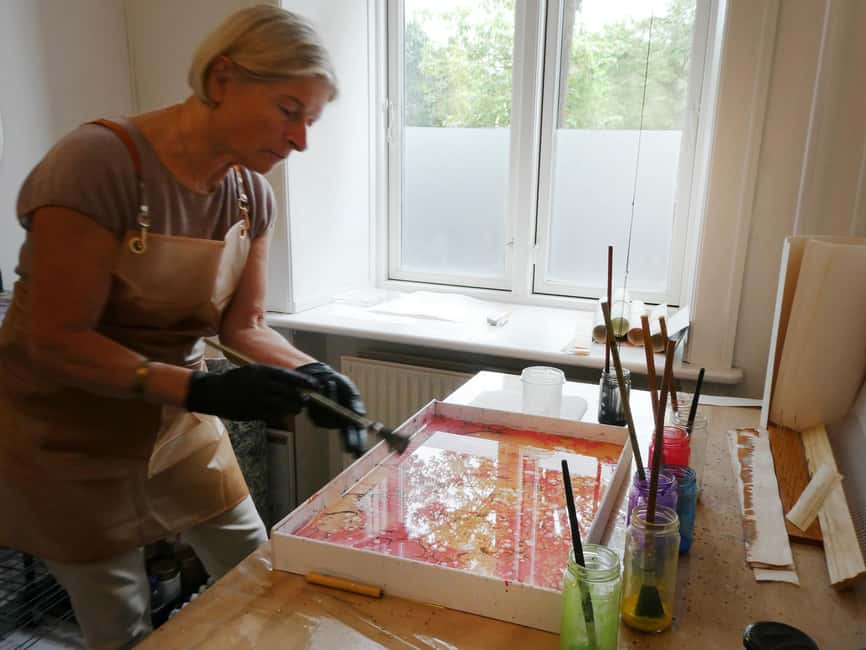
- You learn the full marbling flow, from the carrageenan-based size to pulling your own patterns from the bath
- Tiny groups in an artist studio, with a calm pace that makes it feel more like craft time than a class
- Color + movement lessons, including how gestures change paint swirls and how different colors interact
- Materials are included, so you can focus on the technique instead of shopping for supplies
- Take-home prints are a big win, and the instructor has helped with drying, ironing, packaging, and even hotel delivery for some guests
A hands-on Copenhagen souvenir that actually looks like art
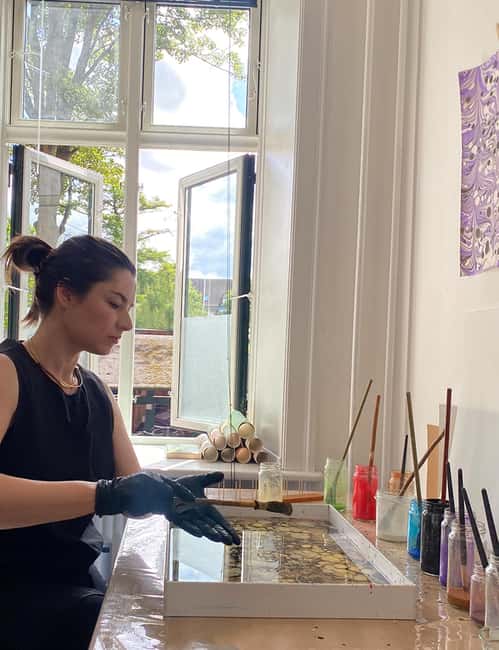
Copenhagen has plenty of great things to see. This workshop is different because you also make something. Not a postcard. Not a quick photo prop. You work with the same kind of marbled paper craft that has been used for centuries to decorate important documents, album covers, endpapers, and even furniture. The point is simple: you create patterns that look too specific to be machine-made.
What makes it satisfying is how fast the feedback happens. The moment you lift the sheet from the floating surface, you see whether your colors flowed the way you intended. Then you get another chance, and another, until you have a set of prints that feel personal.
More workshops to sit in on in Copenhagen:


Where BLADR and Nørrebro set the right tone
The workshop happens at Griffenfeldsgade 27 in Nørrebro, inside the artist bookstore BLADR. That location matters more than you might think. You are not shuffled into a big room. You are in a creative space built for art browsing and small making.
The group size is intentionally small, typically 2 to 3 participants, with singles also welcome. In this setup, the instructor can slow down when you need help, and you can try again without feeling rushed. It is a good fit if you want something calm during a busy city visit.
And yes, the instructor is Goda, a designer and traveller who runs the session. That combination shows in the way the craft is taught, especially when she connects the technique to its long travel across cultures.
How paper marbling works: size, carrageenan, and the big surprise
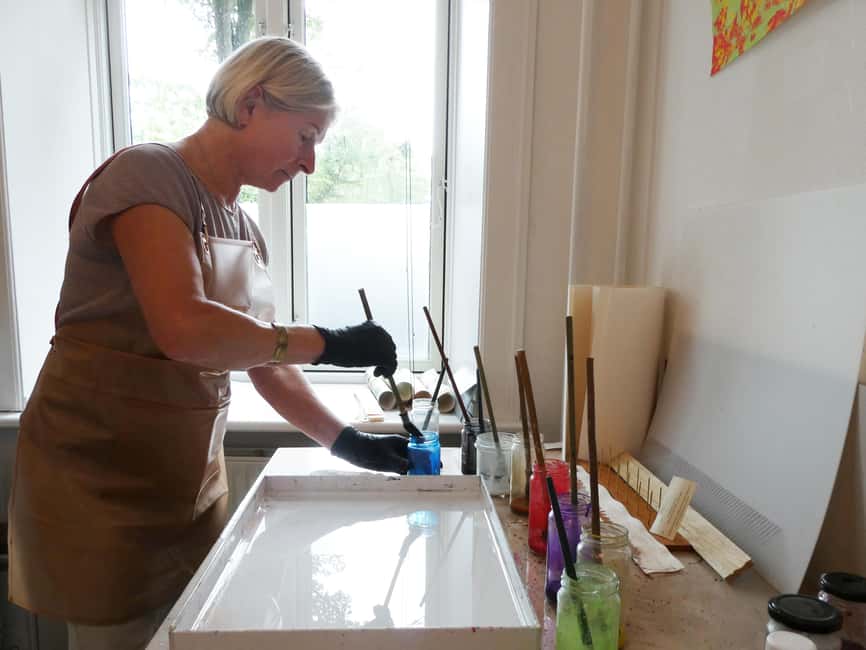
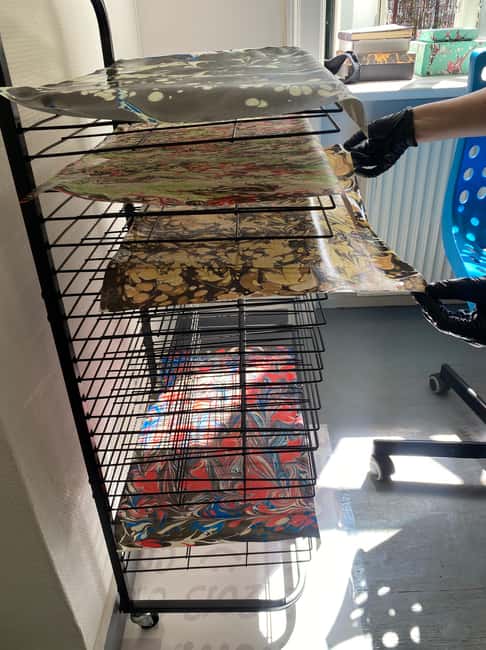
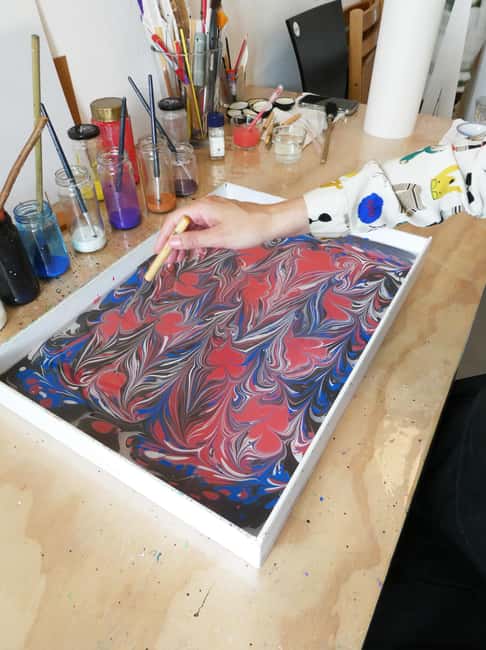
Paper marbling is a painting technique done on a floating surface. In this workshop, the surface is called size, and it is prepared in advance by mixing water with carrageenan powder. You do not need to be a chemist to enjoy it, but it helps to know what makes the magic happen.
Here is the core idea:
- Color is worked across the floating surface.
- A sheet of paper rests on top.
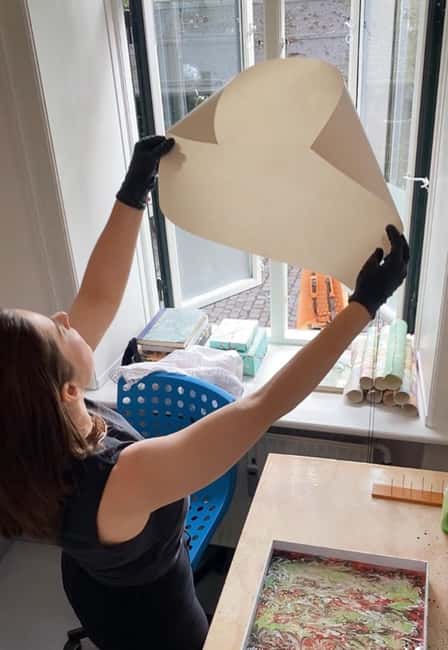
- When you lift it, the paper pulls the paint pattern off the size, leaving a marbled image.
Two things make marbling feel special for beginners. First, the patterns are not perfectly controllable. Even when you do everything the same, you get variation. Second, that unpredictability is the whole point. Each piece ends up different, which is why marbled paper has been prized for decorative uses.
You also learn the traditional tools and the gestures used to create different paint movements. That means you are not just pressing buttons. You are shaping flow, and you start to feel how the same color behaves differently depending on how you move it across the surface.
The technique’s long journey, explained without the lecture
The session gives you context for what you are doing. The craft has roots in Japan, practiced around 1000 years ago, and it spread through regions like Persia and Turkey before reaching Europe through travelers. That is a lot of history for a 150-minute workshop, but the way it is shared stays practical.
Rather than turning into a museum lecture, the story supports the experience. You learn that marbled paper was used for precious documents and album covers because the patterns were both decorative and hard to replicate. That helps you understand why people kept the technique alive, even as printing methods changed around it.
If you like understanding why a craft matters, you will enjoy this part. If you just want to make prints, you will still have enough time to focus on doing the work.
Even more Things to Do in Copenhagen
- Copenhagen Card-Discover: 80+ Attractions & Public Transport
★ 4.6 · 5,351 reviews - Copenhagen: Hop-On Hop-Off Bus Tour with Boat Tour Option
★ 3.9 · 4,122 reviews - Private Walking Grand Tour of Copenhagen
★ 5.0 · 3,953 reviews
What happens during the 150 minutes (and why the pacing feels right)
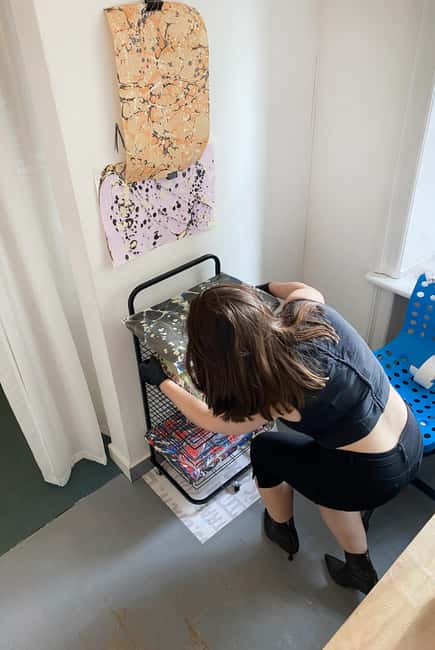
The workshop lasts about 150 minutes, and the flow is built around teaching you enough technique to produce several prints.
1) Setup and demonstration
You start by learning what the floating size is and what to expect when you work with it. Materials are provided, including the pre-prepared carrageenan bath and pre-mixed colors. You are also given an apron, which helps keep the session comfortable even when colors are involved.
Because the colors and paper are ready for you, the lesson stays focused on technique: where to place your sheet, how you lift, and how you work paint movement across the surface.
2) Learning the gestures and tools
Next comes the part where your hand learns the craft. You practice the traditional tools and gestures that create different paint movement patterns. This is where marbling stops being mysterious and starts being repeatable in your own way.
You also learn how different colors play with each other. Some combinations stay crisp. Others blend into soft transitions. You quickly see why people spend time experimenting with palette choices, even after they know the basics.
3) Making your own prints
Then you make your prints. This is the hands-on core of the workshop. You place sheets on the size and lift to reveal the marbled image. Since every piece comes out differently, you get variety quickly, which is great for people who worry they will mess up.
In short sessions like this, it helps that you can leave with more than one print. You are not dependent on getting perfect results on a single try.
4) Tea and coffee while the work dries
Once the inky parts are done, the papers need time to dry. During that waiting period, you are served tea and coffee. This break matters because it changes the mood from rush to finish. You are not running out to catch a train the second the activity ends, and your brain gets to land on what you made.
Taking your marbled papers home: drying is the real planning point
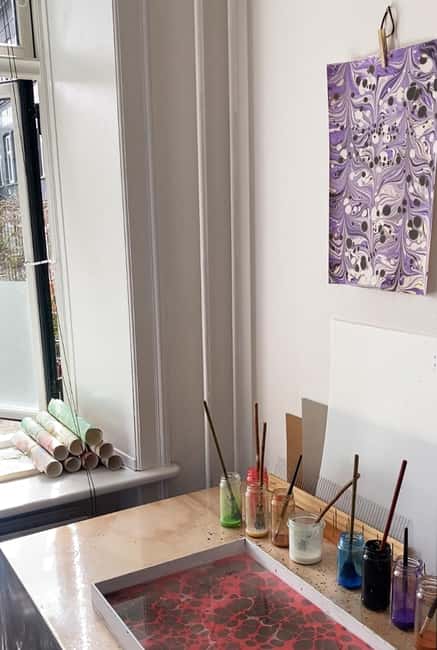
Most workshops end when you stop working. This one continues after you are done creating.
The papers dry after the workshop, and the instructor has handled the finishing steps for some participants, including drying, ironing, and packaging. There are also reports of the finished prints being delivered directly to a hotel, even during snowy weather.
That is a huge value add if you do not want to worry about transporting damp paper in your luggage. It can also be a relief if you hate the idea of packing fragile prints and then trying to protect them on the rest of your trip.
Still, you should plan carefully. A key tip is to book the workshop at least one or two days before you leave Copenhagen, so your prints have time to fully dry. If you are flying out the same day, the timing could be tight.
Practical advice:
- Bring a plan for where you will store finished prints once you have them.
- If you are trying to travel light, this is one of the few art experiences where pre-sorted handling can save you stress.
Price and value: what you get for $110
At $110 per person for about 150 minutes, this is not a budget craft. But it is also not overpriced for what you receive.
You are getting:
- Pre-mixed colors and pre-cut sheets of paper
- A carrageenan-based size that has already been prepared
- An apron
- Tea and coffee
- Small-group instruction and hands-on marbling time
The value is the combination of materials plus guided technique, in a setting that keeps the atmosphere relaxed. Many art activities in major cities are either guided with limited hands-on time, or they require you to buy supplies separately. Here, you can focus on learning the method and making multiple prints.
And the real-world payoff is the take-home souvenir. A good print is something you can frame, gift, or keep as a tangible memory. With marbling, you also get variety from sheet to sheet, so one workshop can produce several finished pieces.
Who this workshop suits best (and who might want another option)
This experience fits best if you like:
- Creative activities where you touch the materials
- Something relaxing that is not another long walking route
- Artsy souvenirs you can frame later
- Small group settings where questions are welcome
It also works well for art lovers and people who think they are bad at art. Marbling has a forgiving logic. The unpredictability is part of the outcome, so you are not judged on drawing skill the way you might be in a more traditional craft class.
If you only want sightseeing, this might feel too slow. This is making time, not a tour of landmarks. But if you want a break from the city pace, it is exactly that kind of reset.
A few logistics you should know before you go
The workshop is taught in English and Danish, and the session includes tea and coffee during drying time. The studio is inside the artist bookstore BLADR, so it is straightforward to find once you are in Nørrebro.
The group is limited to a maximum of 3 participants, which helps explain why the pricing makes sense. With fewer people, instruction stays personal and the craft stays calm instead of chaotic.
Should you book the Copenhagen paper marbling workshop at BLADR?
I think you should book it if you want a Copenhagen memory that you can hold, frame, and actually display. The mix of hands-on marbling technique, a calm artist-studio setting, and take-home prints makes it more than a novelty activity.
Book it especially if you have a couple of days before your departure date. Drying time is the one planning factor that can affect how easy the whole process feels. When you schedule with that in mind, you get the full experience, including time to enjoy the tea and coffee while your marbled papers finish up.
If you are chasing a peaceful, creative break that still feels culturally grounded, this workshop is a strong choice.
FAQ
Where is the workshop located?
It takes place at Griffenfeldsgade 27, Nørrebro, inside the artist bookstore BLADR.
How long is the paper marbling workshop?
The duration is about 150 minutes (around 2 hours).
What does the workshop cost?
The price is $110 per person.
What is the group size?
It is a small group format, limited to 3 participants. It can be 2 to 3 people, or a single participant.
What languages are offered?
The instructor speaks English and Danish.
Are materials included?
Yes. Materials included are pre-mixed colors, pre-cut sheets of paper, the carrageenan bath for marbling, an apron, plus tea and coffee.
What do I make during the workshop?
You make your own marbled prints and can bring them home.
Is print shipping included?
Sending prints is not included.
Is there help with drying and finishing the papers?
In the provided experience feedback, the instructor dried the marbled papers, ironed them, packaged them for traveling, and delivered them directly to a hotel in at least some cases.
What is the cancellation and payment option?
Free cancellation is available up to 24 hours in advance for a full refund, and there is a reserve now and pay later option.
The latest around Copenhagen
- Copenhagen: Guided Tour of Vesterbro and Christianshavn★ 5.0 · 1 review
- Stevn Klint UNESCO Heritage Tour and Vikingborg Fort.★ 5.0 · 1 review
- Historical Pod Walk Tour on the Slaves of Copenhagen★ 5.0 · 1 review
- Queer Copenhagen Historical Tour★ 5.0 · 1 review
- Castle Island’s Royal History: A Self-Guided Audio Tour of Slotsholmen★ 5.0 · 1 review
- Copenhagen Old Town, Nyhavn, Canal Walking Tour & Christiana★ 5.0 · 1 review
Workshops, compared.
Copenhagen Photography Masterclass – Private Photography Lesson
Read our review →

World-class street football experience in Copenhagen
Read our review →Browse the lists this tour appears in