

Reviewed · WALKING TOURS
Historical Pod Walk Tour on the Slaves of Copenhagen
This walk turns ordinary street corners into evidence of history. It links Copenhagen’s today to the Danish slave-trading economy, using a tight route and clear audio stops.
I really like the easy-to-follow format and the fact that you’re not stuck decoding museum labels. I also like that the tour includes a mobile app with an offline download, so you can keep going even if your signal is spotty.
One thing to consider: it is a podwalk, so you’ll need your own smartphone and headphones to hear the story. Also, entry tickets are not included at the stops, so expect mostly exterior viewing.
In This Review
- Key points to know before you go
- A podwalk through Copenhagen’s slave-trade landmarks
- Price, time, and logistics that keep it simple
- What you bring matters: smartphone, headphones, and download time
- Stop by stop: Nyhavn, the Saint Croix connection, and merchant power
- Yellow Palace to Vestindisk pakhus: warehouses and the meaning of public space
- Odd Fellow Palæet again: Christopher MacEvoy and why names matter
- Admission tickets not included: plan for street-level viewing
- How to time it with the rest of your Copenhagen day
- Who this podwalk is for, and who might want a different format
- Should you book the Historical Pod Walk Tour on the Slaves of Copenhagen?
- FAQ
- How long is the Historical Pod Walk Tour on the Slaves of Copenhagen?
- How much does it cost?
- Where does the podwalk start and end?
- What language is the tour offered in?
- What is included in the tour price?
- What do I need to bring?
- Is this a private tour?
- What are the opening hours to use the tour?
- Can I cancel and get a refund?
- Is it accessible for most travelers?
Key points to know before you go
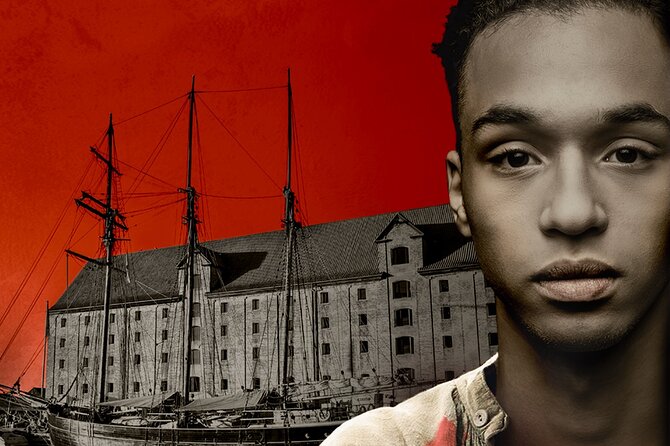
- Offline audio download so the tour works beyond phone reception
- Small group by design with a private experience for your group
- Architecture-led storytelling tied to slave trade sites across central Copenhagen
- No admission tickets included, so plan for street-level viewing
- Start at Nyhavn, end near Amalienborg which is convenient for finishing your day
- Short stops (about 5 to 7 minutes each) that keep the pace manageable
A podwalk through Copenhagen’s slave-trade landmarks
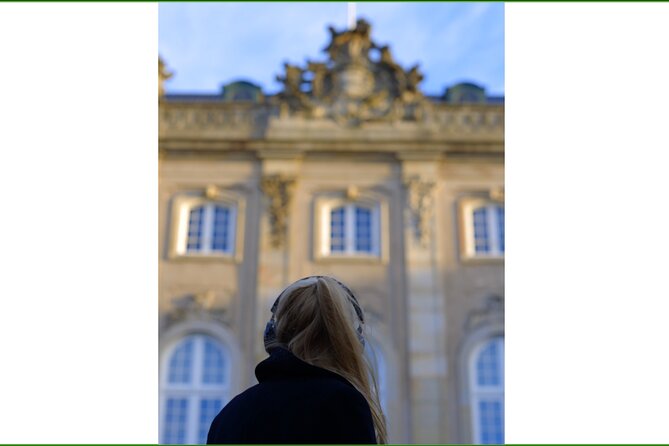
Copenhagen can be gorgeous, and that can make it extra important to look closely. This Historical Pod Walk Tour on the Slaves of Copenhagen uses a sequence of real buildings to explain how Danish commerce was connected to slavery, not just in distant colonies, but through warehouses, merchant power, and Atlantic trade routes.
What makes this approach feel honest is the way it uses place. You’re not only hearing about events. You’re walking past the kinds of structures that helped make the system profitable, including mansions, administrative buildings, and trade-linked warehouses.
You also get a modern delivery method: a mobile audio podwalk. That means you control the pace, and you can spend a little longer at the places that land with you. The whole route is designed for about 1 to 2 hours, so it fits neatly between other sightseeing.
Even more walking tours in Copenhagen:

Price, time, and logistics that keep it simple
The price is $15.73 per group for up to 3 people, which is usually a good value for a self-guided experience. If you’re traveling solo, it still works out well because you’re paying for your group slot rather than per person at a high rate.
Time-wise, you can think of it as a short walk with frequent audio moments. The stops are roughly 5 to 7 minutes each, and the tour runs between 9:00 AM and 5:00 PM daily within the stated operating window. That makes it easy to schedule for daytime light, when you want to see facades clearly.
The route starts at Nyhavn 11 and ends at Bredgade 45, close to Amalienborg Palace. I like that pairing because it helps you build an easy plan: you finish in a grand area, without needing extra transit just to close out the day.
This is also a private tour/activity, meaning only your group participates. That matters because podwalks can feel more comfortable when you are not competing with strangers for attention around a specific building.
What you bring matters: smartphone, headphones, and download time
Because it’s an audio podwalk, the basics are on you. The tour provides a mobile app for Android and iOS and includes the download for offline use.
What you must bring:
- a smartphone
- headphones
- a charged battery (this is one of those trips where you actually want power)
A practical tip: download the audio before you set off. Even central Copenhagen can be hit-or-miss for data coverage, and you will enjoy the walk more if you never have to troubleshoot your connection mid-route.
You should also plan your mindset. This isn’t a light-and-fun history stop. The route covers Danish colonial commerce and the slave economy. The audio is structured to keep you moving, but you may want to pause and look at what you are seeing, not rush past it.
Stop by stop: Nyhavn, the Saint Croix connection, and merchant power

The tour begins in Nyhavn, at Nyhavn 11. If you know Nyhavn, you already know it is one of Copenhagen’s most iconic waterfront streets. That’s part of the point. The audio frames this area as a starting line for the story of Copenhagen’s involvement in slave trading, which forces you to read the setting with sharper eyes.
Stop 2 is Odd Fellow Palæet, described as the mansion of an owner of a slave plantation in Saint Croix. That detail is a gut check. You’re not hearing abstract ideas. You’re seeing a grand building type associated with wealth generated through plantation slavery.
At each stop, the audio keeps the focus tight. Instead of a long lecture, you get short, targeted explanations that link the building’s purpose to the broader system. It helps if you like history that is concrete and visual.
Stop 3 is the Yellow Palace, which today hosts administration of the royal household. Historically, the walk connects this house to a man with near monopoly on transatlantic slave trade from the Gold Coast to the Danish West Indies and Copenhagen. Even if you do not memorize every name, this kind of framing helps you understand that Copenhagen sat at a key node in the trade loop, not just at the end of a shipping route.
Stop 4 is the Copenhagen Admiral Hotel. Today it is a hotel, but in 1787 it was described as one of the warehouses owned by the Danish West India–Guinea Company in Copenhagen. Warehouses are not usually the star of tourist photos. But they matter. This stop nudges you to think about logistics, storage, and how commercial systems run on infrastructure.
More history walks around Copenhagen:
- Copenhagen’s Royal History: A Self-Guided Walking Tour
★ 4.5 · 7 reviews - Danish National Museum Copenhagen Archeology History Tour
★ 4.0 · 6 reviews - Private E-Biking Copenhagen History and Nature Adventures
★ 5.0 · 5 reviews
Yellow Palace to Vestindisk pakhus: warehouses and the meaning of public space
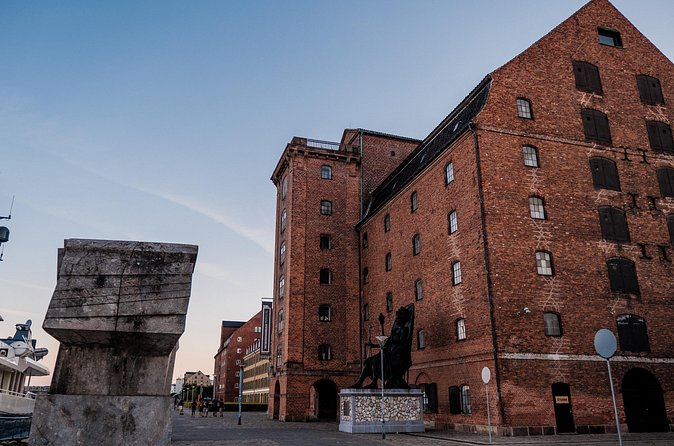
Stop 5 is Vestindisk pakhus. Today it hosts the Royal Cast Collection, but the walk notes it has not always been like that. That contrast is important. Buildings can shift in function over time, but the walls can still carry the story of what they once served.
This part of the route is where the walking format really works. You get to connect the dots across multiple sites in a short period. You are moving from residential wealth (plantation ownership), to commercial power (near-monopoly trading), to storage and trade infrastructure (warehouse ownership). Then you get a current-day cultural use of the same kind of sturdy historic building. That is a powerful way to reflect on how memory can change while physical places remain.
Stop 6 brings you to Rytterstatue af Frederik V. The audio positions the statue as one of the clearest symbols of Danish colonial history. Statues can feel like decoration when you pass them fast. With the context supplied by the podwalk, you are more likely to see it as public messaging tied to power.
This is also where I recommend a slightly slower pace. Not because the tour is long, but because a statue is a visual anchor. If you rush, you miss the chance to connect the symbolic layer to the economic layer you learned just minutes earlier.
Odd Fellow Palæet again: Christopher MacEvoy and why names matter
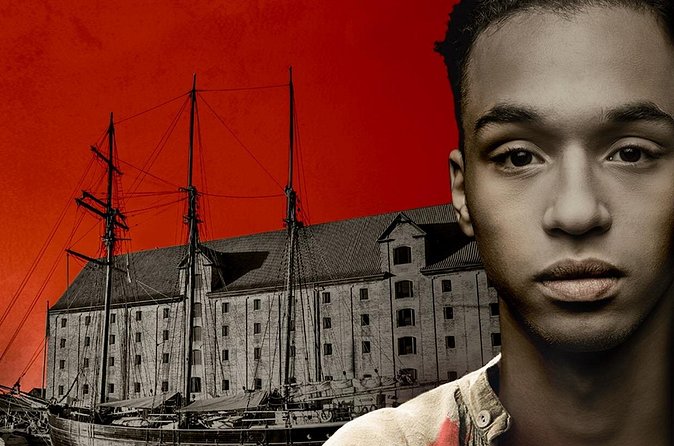
The route returns to Odd Fellow Palæet for Stop 7. That repetition is not an accident. It underscores how the building itself is part of a larger network of influence.
This time, the walk mentions Danish-Scottish merchant Christopher MacEvoy, described as once the owner of the impressive building. It adds that his family was probably the largest slave-owning family in the West Indies. That is heavy information, and the fact that it is delivered right at a recognizable landmark helps the name stick.
If you remember anything from this tour, I’d want it to be the idea that the people behind slavery were not only distant villains. They were merchants, owners, and investors whose wealth built visible local structures.
Stop 7 is also a reminder that history is not only made of dates and documents. It is made of individuals and families, and their decisions shaped shipping routes, plantation economies, and the kinds of buildings you can still walk past in the city today.
Admission tickets not included: plan for street-level viewing
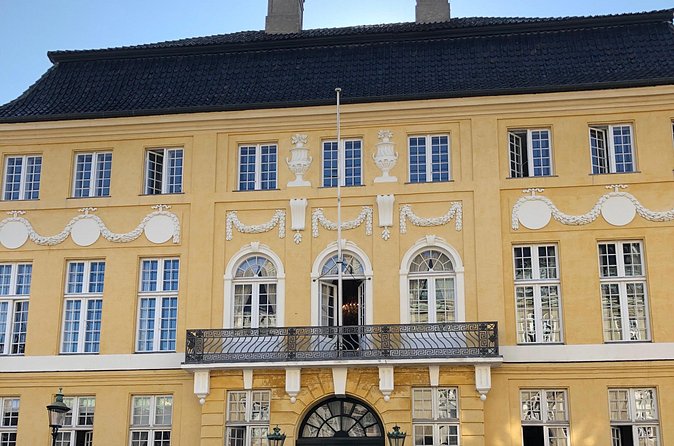
Each stop lists admission ticket not included. That tells you something useful about expectations. This podwalk is built for you to follow the audio while observing what you can see from the street or on accessible grounds.
If you are hoping to spend time inside every site, you might be disappointed. But that limitation can also be a strength. You get a faster, more fluid route, and you do not waste time lining up or paying multiple entry fees.
Still, it is smart to keep flexibility. Some exterior areas may be limited at certain times, and some buildings may have different access rules depending on events. The tour keeps you focused on what you can see, so if you hit a closed gate, you can still continue with the audio sequence.
How to time it with the rest of your Copenhagen day
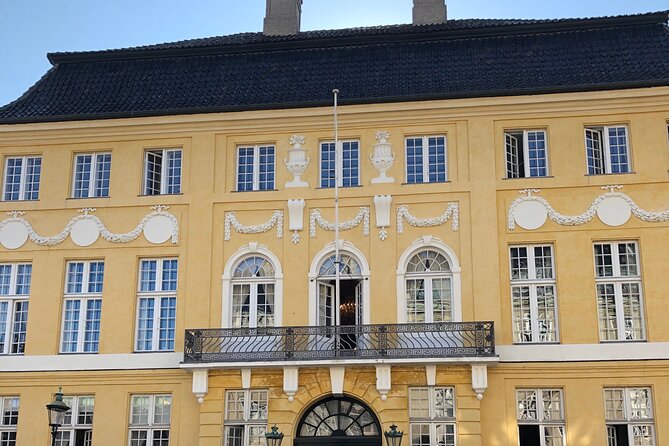
Because the route is short, you can use it as a framework for your day. If you start at Nyhavn, you can pair this with waterfront wandering afterward, then finish at Amalienborg area near Bredgade 45.
A good strategy is to do the podwalk earlier rather than later. Daytime makes it easier to read details on facades and signage around older buildings. It also helps you avoid the moment where you are tired and trying to listen to a complex story through thin audio.
Also, keep in mind the English language option. If you want a calm pace with clear narration, this is better done when you can actually pay attention, not right before a big dinner where you need to rush.
If you are doing other museum stops the same day, consider spacing them out. This tour is story-forward, and it works best when your brain is not switching constantly between unrelated topics.
Who this podwalk is for, and who might want a different format
You’ll probably like this tour if you want:
- a self-guided way to learn about Copenhagen’s slavery-linked sites
- a route built around specific buildings, not just generic themes
- an experience that takes about 1 to 2 hours
- offline audio, which is genuinely helpful in a city where you might hop between neighborhoods
It may not be ideal if you want a live guide Q and A. The audio format is structured and linear. You can pause and revisit segments if the app allows it, but you will not get interactive discussion on the spot.
It can also be emotionally intense in a way that is different from art museums or monuments about other topics. If you like reflection but you want the least possible intensity, you may want to balance it with something lighter afterward.
Should you book the Historical Pod Walk Tour on the Slaves of Copenhagen?
Yes, you should book it if you want a practical, place-based way to understand how slavery connected to Danish trade and power. The big value is that you walk past landmarks tied to plantation ownership, monopoly trading, warehouse infrastructure, and colonial symbolism, all within a manageable time window.
Also, the format is genuinely convenient: offline audio, an easy app-based approach, and a private group setup for up to 3 people at a group price. That makes it a strong option when you are trying to control costs but still want depth.
I’d book this especially if you appreciate thoughtful history that is tied to architecture you can see. Start at Nyhavn, follow the audio sequence, and end near Amalienborg with a clearer sense of how Copenhagen’s past still lives in its buildings. If that kind of connection matters to you, this podwalk is an excellent fit.
FAQ
How long is the Historical Pod Walk Tour on the Slaves of Copenhagen?
It takes about 1 to 2 hours, depending on your pace and how long you spend at each stop.
How much does it cost?
The price is $15.73 per group, up to 3 people.
Where does the podwalk start and end?
It starts at Nyhavn 11, 1051 København K and ends at Bredgade 45, 1260 København, near Amalienborg Palace.
What language is the tour offered in?
The podwalk is offered in English.
What is included in the tour price?
It includes the mobile app (Android and iOS) and a download of the podwalk for offline use.
What do I need to bring?
You need your own smartphone and headphones. Transportation, food, and drinks are not included.
Is this a private tour?
Yes. Only your group participates.
What are the opening hours to use the tour?
The hours are listed as Monday through Sunday from 9:00 AM to 5:00 PM, within the overall operating window shown.
Can I cancel and get a refund?
No. This experience is non-refundable and cannot be changed for any reason.
Is it accessible for most travelers?
Most travelers can participate. Service animals are allowed, and it is near public transportation.
The latest around Copenhagen
- Copenhagen: Guided Tour of Vesterbro and Christianshavn★ 5.0 · 1 review
- Stevn Klint UNESCO Heritage Tour and Vikingborg Fort.★ 5.0 · 1 review
- Castle Island’s Royal History: A Self-Guided Audio Tour of Slotsholmen★ 5.0 · 1 review
- Copenhagen Old Town, Nyhavn, Canal Walking Tour & Christiana★ 5.0 · 1 review
- Queer Copenhagen Historical Tour★ 5.0 · 1 review
- Copenhagen Marble Church Architecture Private Walking Tour★ 5.0 · 1 review
Walking Tours, compared.

Politically Incorrect Private Highlights Walking Tour
Read our review →
Group Walking Tour – City Highlights – 2 Hours
Read our review →
3h walking tour, small group max 10 people Copenhagen
Read our review →
Walk & Canal Tour: Copenhagen Highlights + Changing of the Guards
Read our review →
Browse the lists this tour appears in