Reviewed · THINGS TO DO IN COPENHAGEN
Explore Copenhagen’s Art and Culture with a Local
Copenhagen’s art is easier when someone points it out. This small-group walking tour links street art with major cultural stops, and a local guide keeps the stories grounded in what you are seeing right now. I love the mix of creative Copenhagen, from street artists like Stine Hvid to monuments tied to writers such as Hans Christian Andersen. I also like that it works for first-timers and repeat visitors, because you get both orientation and smart context. One drawback to plan for is that the pace can include quiet stretches, and the route may feel a touch indirect if you are specifically chasing the art museum and the King’s Theatre area.
You are looking at about 1 hour 30 minutes of walking, in English, with a maximum of 8 travelers. The start is Stork Fountain at Amagertorv 6, and the finish is Nyhavn, so you end in one of the most photogenic corners of the city.
In This Review
- Key highlights worth marking on your map
- Stork Fountain at Amagertorv, where the old town starts speaking
- Street art with Stine Hvid, learning how Copenhagen styles its stories
- Andersen’s castle gardens, a quiet pause in the middle of city noise
- Kastellet’s 1664 fortress and the Gefion fountain legend
- Rococo dome and Kierkegaard’s statue, philosophy in stone
- Palace and opera views across the water
- Nyhavn’s colorful 17th-century waterfront, the easiest finish line
- Price and time, what $128.94 buys you in real terms
- How to squeeze more from the walk (and avoid the quiet-pauses issue)
- Who this Copenhagen Art and Culture walk suits best
- Should you book this tour? My practical take
- FAQ
- How long is the Copenhagen art and culture walking tour?
- What is the meeting point for the tour?
- Where does the tour end?
- Is the tour offered in English?
- How much does the tour cost?
- What is included in the experience?
- What is not included?
- What group size should I expect?
- Where is the tour located in relation to transport?
- Are service animals allowed?
- Can I get a full refund if I cancel?
Key highlights worth marking on your map
- A local guide who can explain what you are actually looking at, not just recite dates
- Street art stop focused on Stine Hvid, plus references to other neighborhoods
- Andersen’s sculpture in a castle garden setting, a calm break from city streets
- Kastellet’s 1664 star shape and a legend tied to the Gefion fountain
- A Rococo structure with the largest dome in Scandinavia and a Kierkegaard statue nearby
- Finish at Nyhavn’s colorful 17th-century waterfront facades
Stork Fountain at Amagertorv, where the old town starts speaking
Your tour begins at Stork Fountain on Amagertorv 6, in the thick of Copenhagen’s old-town charm. Even if you have only seen photos, this is the kind of place where the details show up fast: historical buildings around you, and that mosaic-style floor that makes you slow down without anyone telling you to.
This first stop is more than a photo op. It sets the tone for how you will read Copenhagen during the walk. You start noticing how public spaces carry stories, and how art often means something practical, something seen daily, not only something behind glass. If you arrive a little later, or you need a quick reset after getting through the city, this is a good place to start. The guide’s commentary helps you get oriented fast.
Practical note: because you are starting in a central square, you will likely be sharing space with people grabbing quick photos or waiting on buses. Keep your camera ready, but also be ready for brief crowding.
Even more Things to Do in Copenhagen


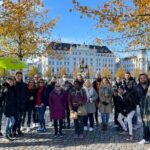

Street art with Stine Hvid, learning how Copenhagen styles its stories
Next you move into street art territory, with a specific focus on work by Stine Hvid. The value here is not just the art itself, it is the way the guide teaches you to see it. You will get a sense of how Copenhagen’s street art fits into neighborhoods, not just as random decoration, but as conversation.
What I like about this stop is that it gives you a method. After hearing what to look for, you can spot other examples around the city even outside the tour. The tour also points out additional impressive street art examples across different areas, so your eyes learn to travel farther than the single wall you start with.
A small consideration: street art is visual, so if it is windy or your attention keeps getting pulled to crowds passing by, you might want to take an extra second before you walk on. Give the guide a brief moment to explain, then go back to looking with fresh eyes.
Andersen’s castle gardens, a quiet pause in the middle of city noise
Then you step into a more serene moment: a historical castle and its gardens, with a sculpture of Hans Christian Andersen included in the setting. This part of the walk changes the tempo. After the energy of the streets, you get space to breathe, look slowly, and connect a famous Danish literary figure with a physical place you can actually stand in.
Even if you are not a deep literature person, Andersen is one of those names that feels more real when you see how a city chooses to honor him in stone or sculpture. The gardens also make this a practical break point. If you are walking with kids, or if you just want a calmer segment, this stop is a good reset.
Since this tour is about art and culture, it helps that the stop blends different meanings of culture at once. You are not only seeing a monument, you are seeing how landscapes and storytelling can be linked.
Kastellet’s 1664 fortress and the Gefion fountain legend

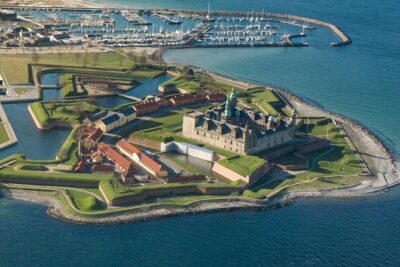
When you reach Kastellet, the scene changes again. Kastellet is described as a star-shaped fortress built in 1664, and the shape matters. Standing near it, you can feel why a fortress layout like this becomes a landmark. It is structured, intentional, and visibly different from ordinary city streets.
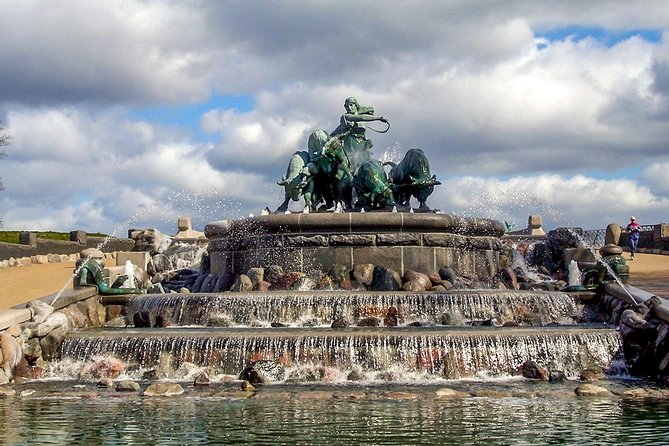
Around this, you also hear the legend tied to the Norse goddess Gefion, depicted in a fountain. That is a smart pairing, because it shows how myths and public art share the same space. You are not only learning about a building. You are learning how stories get placed into city life, for people to encounter while walking to work, meeting friends, or just passing through.
What to watch for: fortresses and fountains can be open-air and exposed to weather. If you are visiting in colder months, dress for wind, and if it is sunny, bring sunglasses. You will likely spend a few minutes looking and listening outside.
Same city, a slower kind of day:
- Copenhagen Highlights Walking Tour
★ 5.0 · 2,324 reviews - Copenhagen: Highlights 3 Hour Bike Tour with a Local Guide
★ 4.8 · 2,312 reviews - Hamlet and Sweden Tour – Two Countries in one day !
★ 5.0 · 2,223 reviews
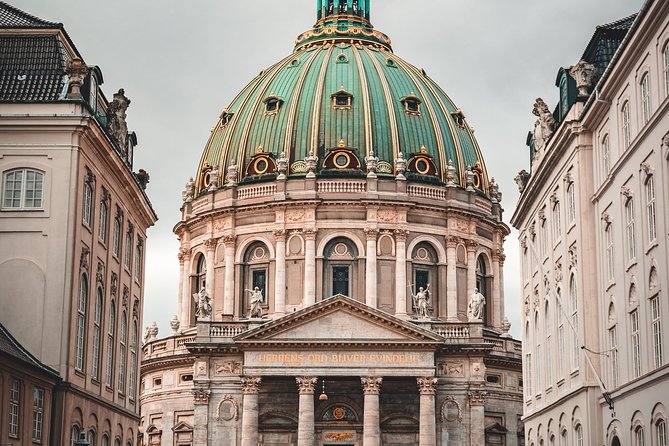
Rococo dome and Kierkegaard’s statue, philosophy in stone
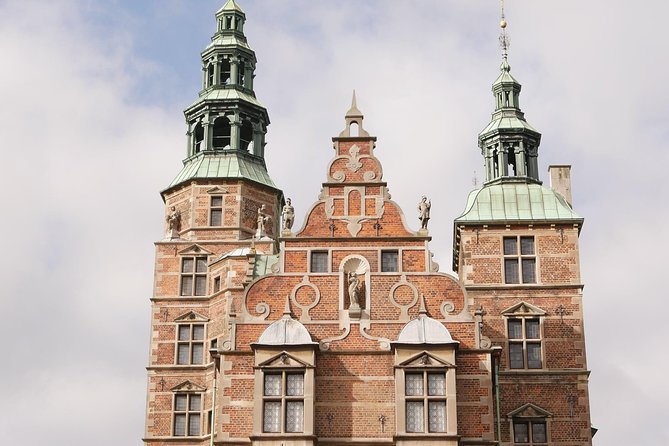
Next comes a Rococo structure with the largest dome in Scandinavia, plus a Kierkegaard statue in the grounds. This is one of those stops where the guide’s job becomes especially useful. Architecture can be impressive on its own, but you get more out of it when someone tells you what makes it stand out and how the area is used.
Rococo style is often about decorative elegance, and pairing that with Kierkegaard is a reminder that Copenhagen treats ideas as a public matter. You are walking through a city where philosophy has a physical presence, not only a bookshelf one.
If you enjoy thoughtful, not-too-academic explanations, this is a highlight. You will likely get enough context to make the statue feel like part of the broader cultural landscape, rather than a standalone piece.
One consideration: if your goal is to enter every building and spend time inside museums, this won’t replace that. The tour stays outside at several major spots. It is designed to make the art and culture around you make sense, quickly.
Palace and opera views across the water

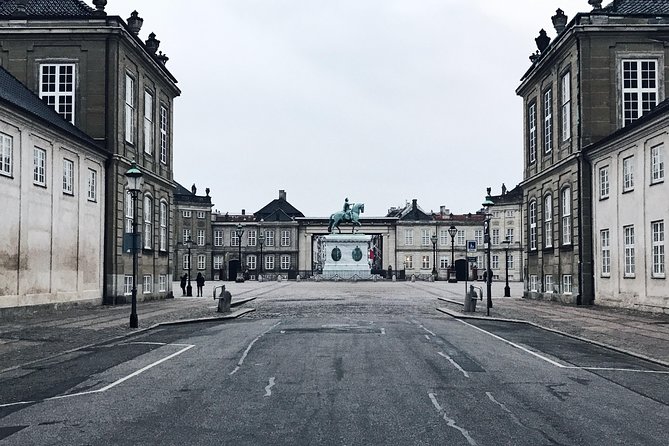
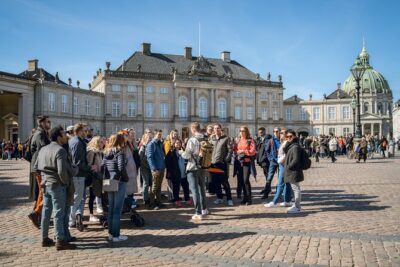
From there, you explore an imposing square with a palace and a garden setting, and you also get a look at the Danish Royal Opera house on the other side of the water. You do not have to be an opera fan to appreciate the value of this segment.
Why it works: Copenhagen is built around water routes and views. Getting a glance across the harbor helps you understand why the city feels composed. Even if your route is on foot, you are constantly mentally mapping the city as a series of connected waterfront scenes.
If you have never been to Copenhagen before, this is a good moment to slow down just enough to take in the geometry of the views. If you have visited before, you can enjoy seeing how the city’s landmarks line up when you approach them from this walking route.
Nyhavn’s colorful 17th-century waterfront, the easiest finish line
The tour ends with a stroll through a picturesque 17th-century harbor with iconic colorful waterfront facades, finishing in Nyhavn. This is a smart ending because it is the kind of place where you can instantly keep exploring on your own. Once the guide drops you at Nyhavn, you can decide whether you want a snack, linger for photos, or connect to public transport without rushing.
This last stretch is also where the day’s themes pay off. You started with art in squares and on walls, moved through literature-linked sculpture and fortress history, then finished in a neighborhood that shows how a city turns everyday life into visual character.
Tip: Nyhavn gets busy. If you want calmer photos, take them earlier in your time there, right after the tour ends, rather than waiting until peak evening crowds.
Price and time, what $128.94 buys you in real terms
At $128.94 per person for about 1 hour 30 minutes, this is not a bargain street stroll. It is a paid walking experience centered on a local guide and an art-and-culture route.
Here is the value math that matters:
- You get a small group, up to 8 travelers, which usually means more chance to ask questions and get specific answers.
- You get structure, with a set route that links street art, public monuments, and major cultural landmarks in one session.
- You get English language guiding, so you are not stuck piecing everything together by yourself.
- You get a mobile ticket, which keeps your day smooth.
I think this price makes sense if you fall into one of these categories: you are new to Copenhagen and want a map in your head by the end, or you already know the basics and want a guide’s lens for art and culture. If you are the type who wants long museum time and deep interior access, you might find the 1.5-hour format a bit short.
Also, the tour notes group discounts, so if you are traveling with friends, it may feel easier to justify. Even if you are solo, this kind of guided walk can be a helpful starting point before you plan longer, self-guided days.
How to squeeze more from the walk (and avoid the quiet-pauses issue)
One theme that matters from the experience feel is pacing. There can be stretches where the guide is not talking as much, so you might have to do a bit of your own looking to stay engaged. That is not necessarily bad. Silence can give you time to observe. But if you want constant commentary, consider this a heads-up.
To get the best outcome:
- Come with 1 or 2 questions ready. For example, ask what to look for in street art, or how Copenhagen connects public art with national culture.
- Take a few slow photo moments, then step back into the walking rhythm. Otherwise crowds can take over your time.
- Wear comfortable shoes. This is a walking tour, and you will cover multiple areas on foot.
- Use the tour as a first pass. If you fall in love with one spot, plan a longer return visit on your own.
If the route feels slightly indirect for you, treat it like a sampler. You will see enough to decide where you want to spend more time later.
Who this Copenhagen Art and Culture walk suits best
This tour fits best if you want a guided way to connect Copenhagen’s creative life to real places. I especially like it for:
- New arrivals who need quick orientation and a cultural storyline
- Returning travelers who want fresh context without repeating every landmark blindly
- People interested in street art plus major monuments, not just one category
It is less ideal if:
- You need a museum-only day with lots of interior time
- You expect a nonstop lecture style commentary the whole way
- You want a perfectly direct walking line to specific museum buildings or theater areas
If your travel style is “see, understand, then wander,” this should feel satisfying.
Should you book this tour? My practical take
I would book it if you want a focused introduction to Copenhagen’s art and culture in about 90 minutes, with a local guide and a route that mixes street art, sculpture, architecture, and waterfront atmosphere. The small group size helps, and ending in Nyhavn is a great convenience.
I would think twice only if you strongly prefer long stops inside museums, or if you know you want a very direct hit on specific indoor attractions. In that case, you might combine this with a separate museum plan afterward.
FAQ
How long is the Copenhagen art and culture walking tour?
It runs for about 1 hour 30 minutes.
What is the meeting point for the tour?
The tour starts at Stork Fountain, Amagertorv 6, 1160 København, Denmark.
Where does the tour end?
The tour ends in Nyhavn, Indre By, Denmark.
Is the tour offered in English?
Yes, it is offered in English.
How much does the tour cost?
The price is $128.94 per person.
What is included in the experience?
A local guide is included.
What is not included?
Personal expenses during the experience and food, drinks, or snacks are not included.
What group size should I expect?
The tour has a maximum of 8 travelers.
Where is the tour located in relation to transport?
It is near public transportation.
Are service animals allowed?
Yes, service animals are allowed.
Can I get a full refund if I cancel?
You can cancel up to 24 hours in advance for a full refund.
The latest around Copenhagen
- Copenhagen: Guided Tour of Vesterbro and Christianshavn★ 5.0 · 1 review
- Stevn Klint UNESCO Heritage Tour and Vikingborg Fort.★ 5.0 · 1 review
- Historical Pod Walk Tour on the Slaves of Copenhagen★ 5.0 · 1 review
- Copenhagen Old Town, Nyhavn, Canal Walking Tour & Christiana★ 5.0 · 1 review
- Queer Copenhagen Historical Tour★ 5.0 · 1 review
- Castle Island’s Royal History: A Self-Guided Audio Tour of Slotsholmen★ 5.0 · 1 review
Things to Do in Copenhagen, compared.
Copenhagen Card-Discover: 80+ Attractions & Public Transport
Read our review →
Hop-On Hop-Off Bus Tour with Boat Tour Option
Read our review →

Highlights 3 Hour Bike Tour with a Local Guide
Read our review →
Hamlet and Sweden Tour – Two Countries in one day !
Read our review →