Reviewed · GUIDED
Copenhagen: The Opera House Guided Tour
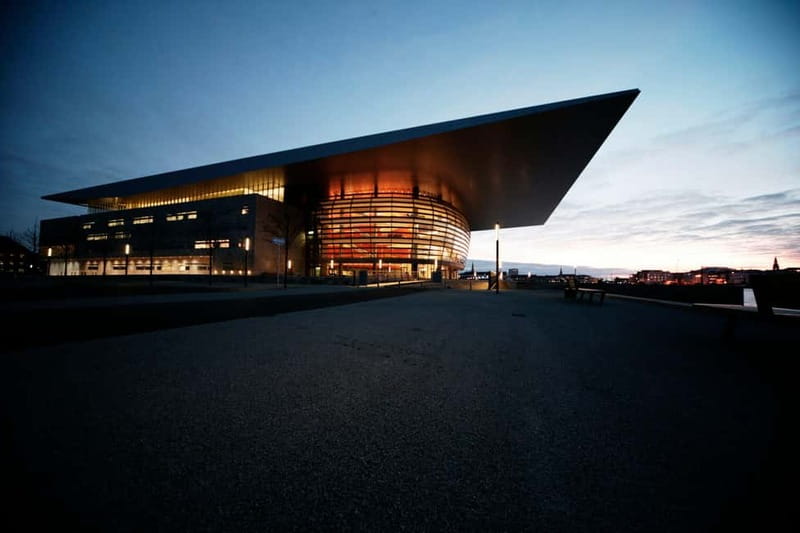
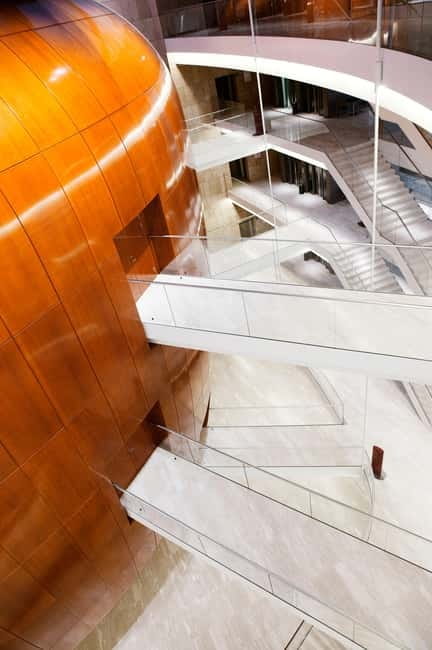
Light steals the show at Copenhagen Opera House. I love how this opera house foyer light is staged like a show of its own, especially with Olafur Eliasson installations and the glossy maple shell framing the main stage. Then the tour shifts gears, taking you behind the scenes to see how this building moves serious scenery with serious precision.
My only caution is that it’s not recommended for children under 7, and you’ll want to travel light because baby strollers and large bags are not allowed.
In This Review
- Key highlights you will feel (not just see)
- Entering the Royal Danish Opera House: why this tour feels different
- Finding the meeting lobby near the harbor entrance
- The foyer experience: overwhelming light, Olafur Eliasson, and the maple shell
- Inside the hall: gilded ceiling and glowing woodwork
- Behind the scenes: how complex sets can actually move
- Learning staging, costumes, and scenography from the source
- Price and value: is $24 worth 75 minutes?
- Who should book this tour, and who might want to skip
- Before you go: practical rules that affect your comfort
- Should you book the Copenhagen Opera House guided tour?
- FAQ
- How long is the Copenhagen Opera House guided tour?
- Where do I meet for the tour?
- What language is the tour in?
- Is this tour wheelchair accessible?
- Is the tour suitable for children?
- What items are not allowed during the tour?
Key highlights you will feel (not just see)
- Overwhelming foyer light that sets the mood fast and makes great photos without rushing
- Olafur Eliasson light sculptures you can study in person, not just admire online
- Glowing woodwork and a gilded ceiling that look different from every angle
- Behind-the-scenes set movement, including how big scenography gets relocated for productions
- Practical explanations about staging, costumes, and scenography in a real performance setting
Entering the Royal Danish Opera House: why this tour feels different
Most opera house tours are about architecture. This one is about architecture plus the machine behind the art. You get the dramatic front-of-house spaces, then you’re shown how the opera house supports the kind of staging that is hard or impossible in a typical theatre.
If you like visual art, this is also a crossover experience. The tour puts you close to Olafur Eliasson light sculptures, and you’ll see how that modern artwork sits inside one of Denmark’s most important cultural buildings.
And because the tour is guided in English and lasts 75 minutes, it works well when you want something meaningful without losing half a day.
Even more Things to Do in Copenhagen
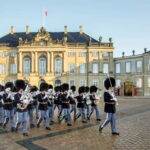



Finding the meeting lobby near the harbor entrance
You meet in the lobby at the main entrance out to the harbor, just around the corner from Ekvipagemestervej 10. Plan to arrive 15 minutes early so you can check in and get settled before the group starts moving.
This matters more than you’d think. Opera houses have a way of making you slow down in the wrong places, like when you’re trying to take photos in the foyers or find a specific spot in the auditorium. Arriving early helps you start the tour relaxed, not hunting for the right doorway while everyone else is already heading in.
Also, the tour has a clear flow: foyer, hall, then backstage. You’ll get the best experience if you’re ready to follow the guide’s pace.
The foyer experience: overwhelming light, Olafur Eliasson, and the maple shell
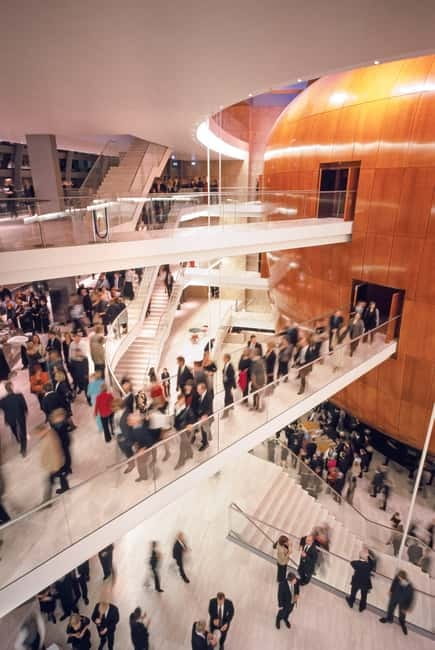
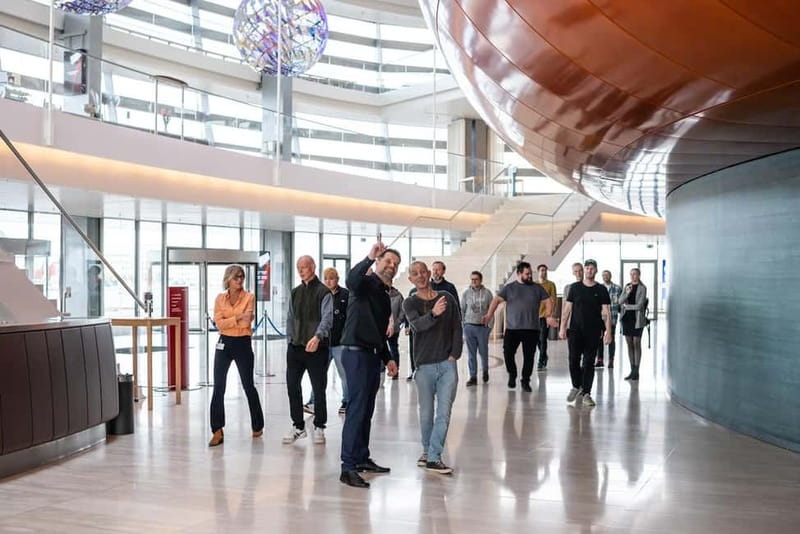
The tour begins in the main foyer by the entrance, and it’s designed to hit you immediately. The light is so strong and so deliberate that it feels almost like a performance cue, not just lighting for visitors.
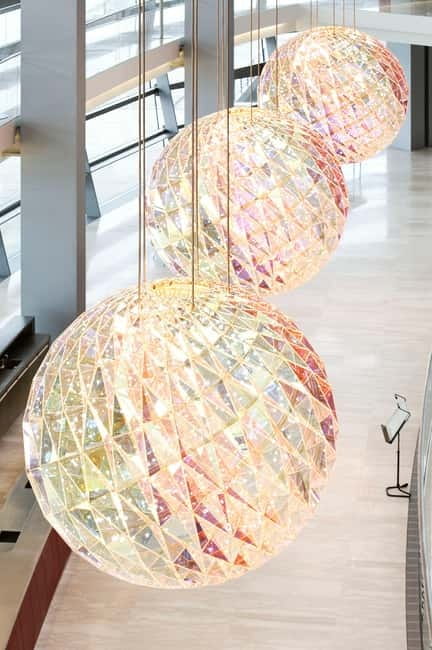
Right away, you get to see Olafur Eliasson’s world-renowned light sculptures. This is where I think the tour does a smart job. Instead of treating the art like a distant landmark, it lets you stand close and notice how light behaves across surfaces. You can see why this kind of work is so associated with spaces like this, where architecture and light are in conversation.
Then comes the glossy maple shell around the main stage. Even if you’re not an architecture person, you’ll get the point: the space is built to glow, and it’s built to make the stage feel framed and alive.
What I liked most here is the mix of scale and intimacy. It’s grand enough to feel iconic, but the tour guides you in a way that still lets you look and take it in without feeling shoved through a conveyor belt.
Inside the hall: gilded ceiling and glowing woodwork
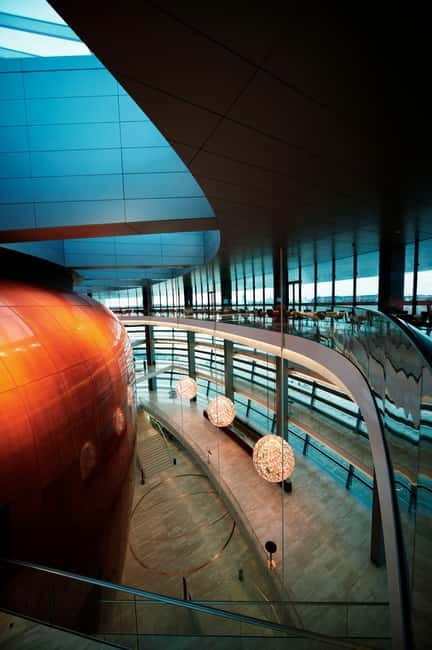
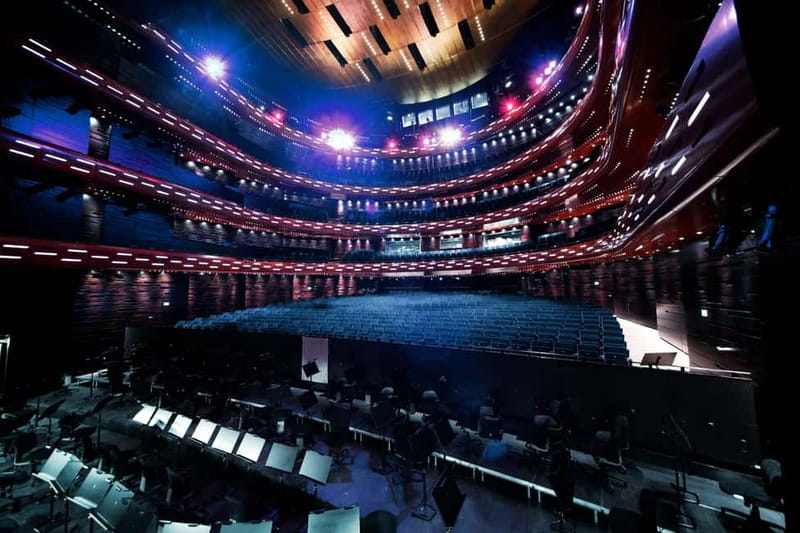
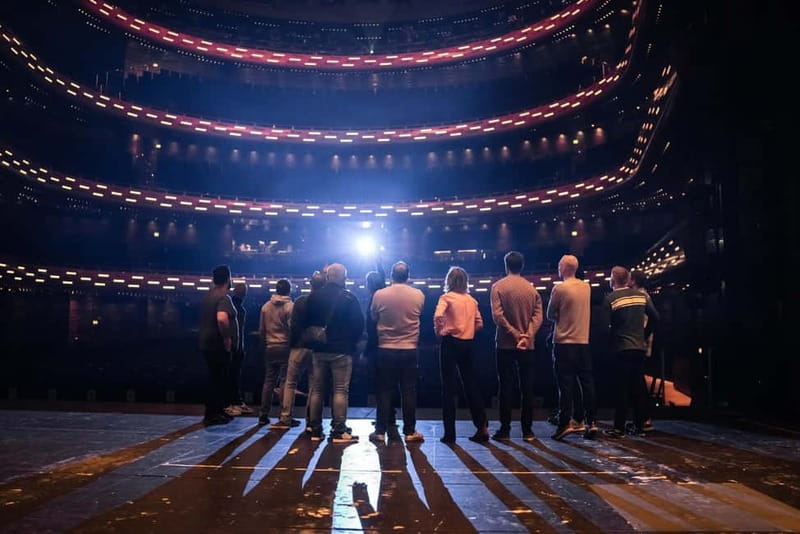
After the foyer, you move into the main hall atmosphere, where the focus shifts from dramatic light to warm detail. The gilded ceiling and the glowing woodwork become the center of attention.
From a visitor standpoint, this is the payoff moment. The hall is where you understand how the opera house creates mood for performers and audience alike. The glow in the woodwork isn’t random decoration. It’s part of how the room supports movement, faces, and staging in a way that reads well from your seat.
One practical tip: pay attention to how the guide times your stops. You’ll likely pause in spots where lines of sight and highlights make sense. If you wander, you might miss the effect the guide is pointing you toward, especially with a room that plays so much with reflection and lighting.
A handful of other Copenhagen bookings
- Copenhagen: Highlights 3 Hour Bike Tour with a Local Guide
★ 4.8 · 2,312 reviews - Copenhagen Sightseeing Classic Canal Tour With Live Guide
★ 4.5 · 1,906 reviews - Copenhagen Highlights 3 Hour Bike Tour with local Guide
★ 5.0 · 1,125 reviews
Behind the scenes: how complex sets can actually move
Then you go backstage, and this is where the tour turns from pretty to fascinating.
You’ll see how the opera house can support large, complex scenography by using movable stage fields. In plain terms, it’s not just that the building has space. It has a system that lets staging shift in ways that can create illusions on stage.
This is the part I’d recommend most strongly if you like how theatre works. Seeing the physical reality behind the show makes the stage magic feel earned, not accidental.
A good way to think about it is: the stage is a platform, but the show depends on choreography between people and machines. Opera depends on timing, safety, and engineering. The backstage portion helps you understand why the productions you watch only happen because the building can handle the load and complexity.
Learning staging, costumes, and scenography from the source
During the tour, you also learn how staging performances work together with costumes and scenography. The guide doesn’t treat costumes as a separate world from the set, and that’s a big part of why this tour feels more useful than a typical architecture walk.
Here’s what you should take away: scenography is not just scenery. It includes the way space, movement, lighting, and material choices combine to shape the story. In this building, those choices are supported by high-tech solutions and movable elements.
If you’re the type who watches opera and starts wondering how they pull off the transitions, you’ll love this section. You’ll start connecting the dots between what you see onstage and what has to be planned and built offstage.
And even if you don’t know opera terminology, the guide keeps it grounded. The goal is to help you understand the logic behind the illusion.
Price and value: is $24 worth 75 minutes?
At $24 per person for a 75-minute guided tour, the value comes from the combination of experiences you get in one ticket.
You’re paying for three things at once:
- Access to areas and explanations you won’t get on a self-guided walk
- A focus on key visual features, like the foyer light and Olafur Eliasson installations
- A backstage look at how sets can move and how productions are supported
If your only goal is sightseeing photos, you might find cheaper options for the area. But if you want to understand why the Royal Danish Opera House feels so high-tech and production-ready, this tour makes that knowledge feel immediate, not abstract.
Also, the pace is short enough that it won’t exhaust you. You still get a full experience without committing your whole afternoon.
Who should book this tour, and who might want to skip
I’d book this if you enjoy any of these:
- Architecture and design, especially spaces shaped by light
- Contemporary art installations like Olafur Eliasson
- Stagecraft, scenography, or just how productions pull off big effects
- A guided introduction to a major Copenhagen cultural venue
I’d reconsider if you are traveling with young kids. The tour is not recommended for children under 7, and the spaces can be busy as groups move between key points.
It’s also best for visitors who can follow rules about bags and movement. There’s no food and drinks allowed, baby strollers are not allowed, and luggage or large bags are not allowed.
Finally, because the tour is in English, it’s a great fit if you’re comfortable in that language. If you prefer Danish, you’d need a different option through The Royal Theatres site.
Before you go: practical rules that affect your comfort
A few limits help keep the tour smooth, and they can change how you pack for the day.
Not allowed:
- Baby strollers
- Food and drinks
- Luggage or large bags
- Pets (assistance dogs are allowed)
You should also note:
- The tour is wheelchair accessible.
- It runs in English.
- The meeting point is in the lobby at the main entrance out to the harbor, around the corner from Ekvipagemestervej 10.
- You should arrive 15 minutes early.
One more practical thought: this is a tour where you may want both hands free for your phone and camera. Avoid bringing bulky items that make you feel awkward while moving through indoor spaces.
If your plans are flexible, you can book and keep options open thanks to the free cancellation window (up to 24 hours in advance) and the reserve now, pay later approach.
Should you book the Copenhagen Opera House guided tour?
Yes, if you want a real look at how a top opera house works. This tour earns its cost by pairing the stunning public spaces, like the foyer light and hall details, with a backstage explanation that makes the technology and staging feel understandable.
I’d skip it only if you’re bringing small kids under 7, or if you’re hoping for a casual, unguided wander. The experience is guided, timed, and structured around seeing specific areas and learning how the production engine runs.
If you’re doing Copenhagen on a schedule and want one activity that connects architecture, art, and the mechanics of theatre, this is a strong pick. You’ll leave with sharper eyes for stage illusions, and you’ll also understand why the building itself feels like part of the show.
FAQ
How long is the Copenhagen Opera House guided tour?
The tour lasts 75 minutes.
Where do I meet for the tour?
Meet in the lobby at the main entrance out to the harbor, just around the corner from Ekvipagemestervej 10.
What language is the tour in?
The guided tour is in English.
Is this tour wheelchair accessible?
Yes, it is wheelchair accessible.
Is the tour suitable for children?
It is not recommended for children under 7.
What items are not allowed during the tour?
Baby strollers, food and drinks, luggage or large bags, and pets are not allowed (assistance dogs are allowed).
The latest around Copenhagen
- Copenhagen: Guided Tour of Vesterbro and Christianshavn★ 5.0 · 1 review
- Stevn Klint UNESCO Heritage Tour and Vikingborg Fort.★ 5.0 · 1 review
- Historical Pod Walk Tour on the Slaves of Copenhagen★ 5.0 · 1 review
- Copenhagen Old Town, Nyhavn, Canal Walking Tour & Christiana★ 5.0 · 1 review
- Queer Copenhagen Historical Tour★ 5.0 · 1 review
- Castle Island’s Royal History: A Self-Guided Audio Tour of Slotsholmen★ 5.0 · 1 review
Guided, compared.

Highlights 3 Hour Bike Tour with a Local Guide
Read our review →
Copenhagen Sightseeing Classic Canal Tour With Live Guide
Read our review →
Copenhagen Highlights 3 Hour Bike Tour with local Guide
Read our review →


Guided Party Pub Crawl with 4 Shots and 1 Drink
Read our review →
Segway Tours Copenhagen w. Guide & Concierge Service. 2 Hours+
Read our review →