
Reviewed · WALKING TOURS
Copenhagen Private Walking Tour
One city, one story thread, and a lot to see on foot. This private Copenhagen walk is built around Hans Christian Andersen plus the big-power stops like palaces and government buildings. I love how the guide connects scenes to real places, and I also like that you cover a smart mix of canals, castles, and squares in just a few hours. One thing to consider: it is mostly quick stop-and-go, with no museum time, so if you want deep inside visits, you will need to plan that separately.
A strong part of the experience is the human touch. The guide is Danish and has lived in Copenhagen for decades, and the tour is led in a way that works well for families, including kids who would normally tune out. If you travel with German speakers, Peter’s German came through clearly in a way that felt genuinely helpful, not forced.
For planning, expect a 3-hour walk that covers about 3.5 km total. The pace is steady, and you finish near City Hall Square by Tivoli, which makes it easy to keep exploring after.
In This Review
- Key highlights you’ll feel fast
- The value of a private walk in Copenhagen
- Starting at Gammel Strand and ending near Tivoli, in a smooth city-center loop
- Nyhavn and the Andersen thread along the canal
- Amalienborg and Christiansborg: royal and political Copenhagen, without the queues
- Church of Our Lady: what war did, and why it still matters
- Rosenborg Castle and the Royal Garden walk-by
- Copenhagen Synagogue: a moving WWII story on your route
- The Round Tower: science, horses, and a famous visitor
- Kongens Nytorv and Rådhuspladsen: busy squares with Andersen built in
- Regenbuepladsen and Magstræde: Copenhagen’s modern memory and medieval grit
- Absalon’s statue: where Copenhagen began as defense
- Timing, pacing, and how to get the most out of those 10-minute stops
- Price and logistics: what $233.93 per group really buys
- Who should book this walk?
- Should you book the Copenhagen Private Walking Tour?
- FAQ
- How long is the Copenhagen Private Walking Tour?
- What does the tour cost, and what is the group size?
- Is this a private tour?
- Is museum admission included?
- Where do we meet, and where does the tour end?
- What kind of ticket do I need?
- Is there free cancellation?
- Is it okay for people traveling with service animals?
- Does the guide speak German?
Key highlights you’ll feel fast
- A Danish guide with long local experience and strong storytelling
- Hans Christian Andersen as the through-line, from Nyhavn to city hall
- Royal Copenhagen in one route, including Amalienborg and Christiansborg exteriors
- Big landmarks with short, efficient stops so you see more in less time
- No museum entry included, which keeps the tour moving
- Squares with modern meaning, including LGBT history at Regenbuepladsen
The value of a private walk in Copenhagen
Copenhagen can be a great walking city, but getting your bearings fast is the whole game. This is priced per group, up to 10 people, so it can actually be good value if you travel with family or friends. Even as a couple, you are paying for a private guide, not a seat on a big group bus tour.
What you get for your money is simple: a focused 3-hour route in the city center, guided by someone who knows where the stories land. You also avoid the friction of trying to stitch together “what is what” on your own. The tour stays practical, and it does not waste time with museum tickets, lines, or long indoor detours.
The main drawback is also part of the same design choice: because the stops are mostly outside, you will not go inside places like Rosenborg or the key government buildings. If you love interiors, collections, and long audio-guide sessions, you will likely want to add museum time after.
Even more walking tours in Copenhagen:


Starting at Gammel Strand and ending near Tivoli, in a smooth city-center loop
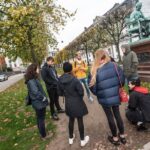
The walk starts at Gammel Strand 1 and finishes at City Hall Square by Tivoli and the metro. That matters because it helps you build a day plan. After the tour, you can branch off in multiple directions without needing a second round of transportation.
You are also walking about 3.5 km over roughly 3 hours, which is a manageable distance for most visitors. The tour is designed as a continuous city-center circuit, with short stops that let the guide tell you the important context without dragging you down to a crawl.
A mobile ticket is included, which is a modern convenience. And since the tour is private, your group controls the pace more than in standard group walking tours.
Nyhavn and the Andersen thread along the canal
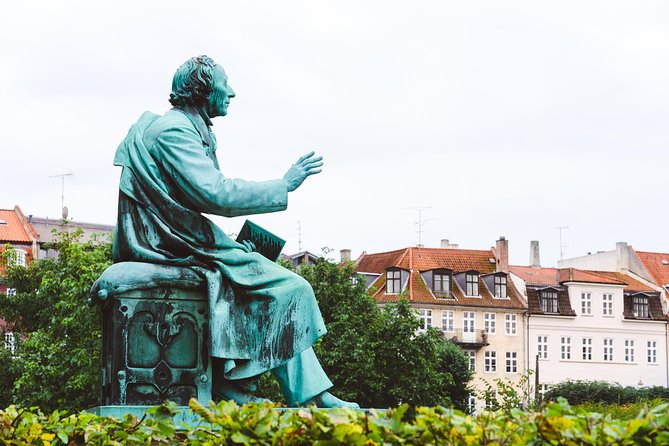
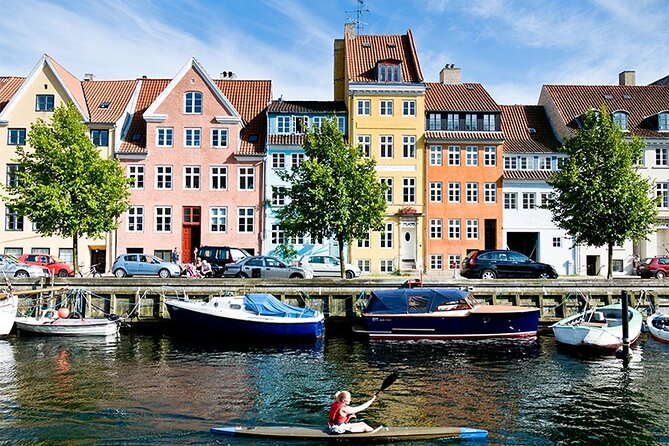
You begin at Nyhavn, the canal that now feels made for weekend strolls, but has deeper roots. This is where sailors and shippers used to gather, and it also ties into Hans Christian Andersen’s world. Even if you have seen Nyhavn in photos, the guide’s job is to explain what the canal used to be for, and why it became part of Andersen’s setting.
Here is what I like about starting at Nyhavn: it gives you a sensory anchor early. You see the water, the life along the harbor edges, and you get the feeling of Copenhagen as a trading city, not just a postcard.
Keep in mind that Nyhavn can be busy, especially later in the day. If you are traveling at a popular time, stand where the guide indicates and use the stop for quick orientation and story, then move on before you get stuck in crowds.
Amalienborg and Christiansborg: royal and political Copenhagen, without the queues
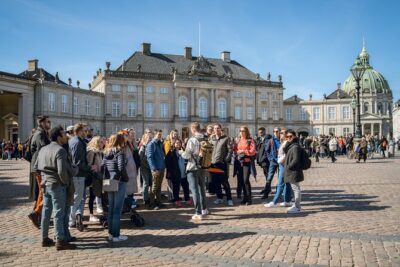
Next up is Amalienborg Palace, home to the Danish royal family. You make a short stop without going in, but you still get the big-picture value: why this monumental axis matters, and how the city planned its grand sight lines between key landmarks.
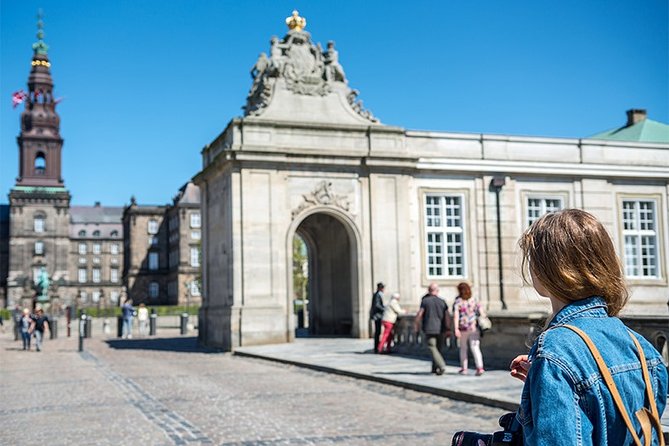
After that, you head to Christiansborg Slot, the center of Danish government power. This is where Parliament, the Prime Minister’s office, and the Supreme Court share one major complex, and it is open to everyone. Your tour moment here is also outside, but the context is the point. The guide helps you connect architecture to governance, so the building stops being just a famous facade.
If you want inside access, plan it separately. But as an introduction, these stops work well because they show you Copenhagen’s “power geography” early, then you shift to culture and daily life.
Even more Things to Do in Copenhagen
- Copenhagen Card-Discover: 80+ Attractions & Public Transport
★ 4.6 · 5,351 reviews - Copenhagen: Hop-On Hop-Off Bus Tour with Boat Tour Option
★ 3.9 · 4,122 reviews - From Copenhagen: Lund and Malmö 2-Country Tour
★ 4.7 · 3,807 reviews
Church of Our Lady: what war did, and why it still matters
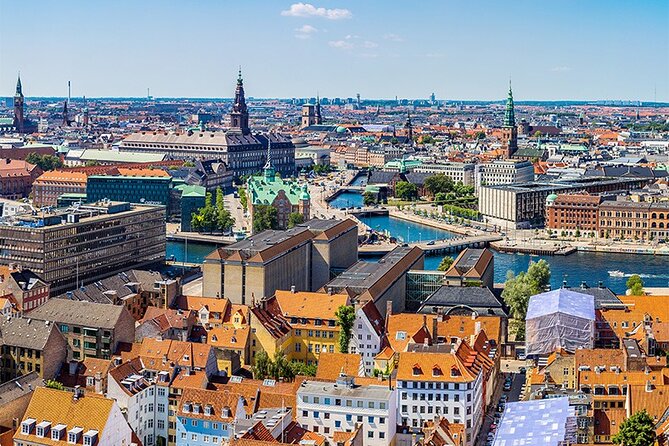
At Church of Our Lady, you get one of the tour’s heavier historical notes. The church was destroyed in 1807 during a British Admiral Nelson bombardment, with hundreds of dead civilians, and a complete loss of the Danish navy.
This is the kind of stop where a guide can prevent a common mistake: treating a landmark like a pretty backdrop only. With the context, you see why this building matters in a national memory, not just on a sightseeing checklist.
Because you only stop briefly, you should come ready to listen, then move. If you are the type who likes to linger, you might want to circle back later. This stop is about understanding the why, not soaking up every detail.
Rosenborg Castle and the Royal Garden walk-by
Rosenborg Castle is a highlight for many first-time visitors. It began in 1634 as a king’s summer house, and today it is associated with the Royal Jewels. On this walk, you do not go in, but you pass it through the Royal Garden for a different kind of payoff.
What you get is atmosphere. The garden path lets you feel the shift from street noise to a more composed, royal setting. It also helps you understand that Copenhagen’s major sites are not isolated objects. They are connected by gardens, sight lines, and city planning.
The tradeoff is the obvious one: no museum entry here. If you want to see the Royal Jewels up close, this tour is not a substitute. Think of Rosenborg here as a story stop that sets up a better visit later, if you want one.
Copenhagen Synagogue: a moving WWII story on your route
You also pass Copenhagen Synagogue, and the stop is built around a specific WWII story: it served as a center for the safe evacuation of Danish Jews to Sweden.
A tour like this can handle sensitive topics well only if it stays focused and respectful. Here, the key value is that you do not have to guess the meaning of the building. You leave the stop with a clear understanding of why the site is important.
Since this is a short stop, take it as an orientation point. If this subject deeply interests you, you may want to do further reading or an additional focused visit after the walk.
The Round Tower: science, horses, and a famous visitor
At the Round Tower, you learn how it was an astronomical observatory from 1642. The story gets more vivid when you hear about Russian czar Peter the Great visiting and going to the top riding on a horse.
This is a great stop for two reasons. First, it turns “old tower” into something practical and specific, with a clear original purpose. Second, the horse story gives you a visual that makes the facts easier to remember.
Because you do not enter, you will not climb inside on this tour. Still, seeing the tower in the broader Copenhagen setting helps you appreciate how the city placed learning and observation alongside everyday life.
Kongens Nytorv and Rådhuspladsen: busy squares with Andersen built in
Then the route shifts to major squares, where Copenhagen’s urban energy is easiest to feel.
At Kongens Nytorv (Københavns King’s New Square), you get a busy central hub surrounded by small palaces. The guide uses the stop to show you that Copenhagen’s grandeur is not only in castles. It also lives in city-center planning.
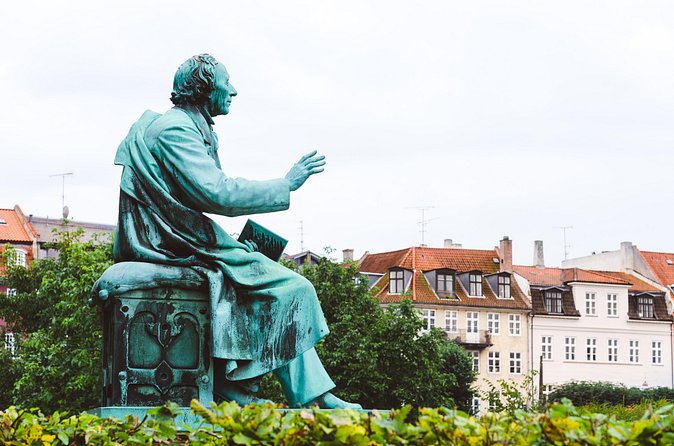
At City Hall Square (Rådhuspladsen), you see the Town Hall from 1905 and a statue tied to Hans Christian Andersen, a lonely fairy tale writer in bronze. This is one of the clever moments where the Andersen theme becomes visible as you physically move through the city.
If you want a photo, these squares are where it works best. If it is crowded, just take your pictures quickly and let the guide finish the story before moving on.
Regenbuepladsen and Magstræde: Copenhagen’s modern memory and medieval grit
Regnbuepladsen (Rainbow Square) is a tribute to LGBT people everywhere. It also commemorates the world’s first same-sex marriage in 1989 in Copenhagen. It is a powerful reminder that Copenhagen’s identity includes modern social history, not just royal heritage.
Then you head to Magstræde, a narrow medieval street with cobbled stones, famously also called Toilet Street. The street name makes you smile, but the real value is that you see how medieval Copenhagen still feels physically tight and walkable.
This segment works well if you want contrast. You get formal squares and big history, then you drop into small scale street life.
Absalon’s statue: where Copenhagen began as defense
The final stop is the Rytterstatue af Absalon. Absalon was a warrior bishop who founded Copenhagen in 1167 to defend against raiding German pirates that attacked Denmark repeatedly.
This stop closes the loop by dragging the timeline way back. After Andersen, royal buildings, and modern memory, you get the origin story: Copenhagen did not start as a style brand. It started as a defensive settlement.
A short stop here is enough to make the city feel older and more intentional. You finish with a sharper sense of why the river, harbor, and streets mattered from day one.
Timing, pacing, and how to get the most out of those 10-minute stops
Each stop is brief, about 10 minutes per location, with the walking between them doing the heavy lifting. That schedule is great for people who want to see a lot without getting worn down. It is also good for families, since kids can handle short story bursts better than long lectures.
For the best experience, do two simple things:
- Listen for the connection points, not just the facts. Andersen shows up in multiple places, and the guide keeps tying the story back to the physical setting.
- Wear shoes that handle cobblestones. Copenhagen’s medieval street feel is part of the charm, and it is not always smooth.
If you are someone who wants to stare at details for 30 minutes at a time, you might feel slightly rushed. In that case, consider using the tour to get oriented, then choose one or two follow-up stops for longer time.
Price and logistics: what $233.93 per group really buys
The price is $233.93 per group, up to 10 people, for about 3 hours of private guiding. For one person, it can feel pricey. For a small group, it becomes more reasonable because you are splitting the cost of a guide across multiple people.
Also, you are not paying for museum entry. The tour explicitly keeps admission out of the plan, which lowers the cost and keeps the schedule clean. That is good value if you like a guided overview and plan your own ticketed visits later.
If you already know you want to go inside key sites during the same time window, this price may feel less efficient. But if your goal is to understand Copenhagen’s story thread and see the main landmarks quickly, this setup is a solid deal.
Who should book this walk?
This tour fits you if you:
- Want a private guide in a compact time window
- Like guided storytelling as you move through the city
- Are interested in Hans Christian Andersen and how his world connects to real places
- Prefer outside sightseeing over museum marathons
It may not fit you as well if you:
- Want long interior visits at Rosenborg or government sites
- Have very limited mobility or need frequent long rest breaks
For families, this is one of the better formats. Short stops plus active guidance helps kids stay engaged, and the route includes a mix of canal views and landmark variety.
Should you book the Copenhagen Private Walking Tour?
Yes, if you want an efficient, story-led overview of central Copenhagen with a guide who can turn landmarks into clear meaning. I’d book it when you are trying to orient yourself early in your trip, or when you want a low-stress way to cover a lot of ground without deciding which museum to sacrifice.
Skip or adjust your expectations if you are planning a “full sites inside only” day. This walk is built for seeing and understanding, not for deep ticketed time. But as a foundation, it sets you up to explore the city on your own afterward, with fewer wrong turns and more context.
FAQ
How long is the Copenhagen Private Walking Tour?
The tour lasts about 3 hours. You will walk a total of around 3.5 kilometers.
What does the tour cost, and what is the group size?
It costs $233.93 per group, with a maximum group size of up to 10 people.
Is this a private tour?
Yes. It is a private tour/activity, so only your group participates.
Is museum admission included?
No. The tour does walking stops, including several without going inside, and admission is not included.
Where do we meet, and where does the tour end?
You start at Gammel Strand 1, 1202 København, Denmark. You end at City Hall Square (next to Tivoli Gardens and the underground metro station).
What kind of ticket do I need?
You receive a mobile ticket.
Is there free cancellation?
Yes, you can cancel for a full refund up to 24 hours in advance.
Is it okay for people traveling with service animals?
Yes. Service animals are allowed.
Does the guide speak German?
One guide, Peter, was noted as speaking German very well, which can help if you or your group prefers German.
The latest around Copenhagen
- Copenhagen: Guided Tour of Vesterbro and Christianshavn★ 5.0 · 1 review
- Stevn Klint UNESCO Heritage Tour and Vikingborg Fort.★ 5.0 · 1 review
- Historical Pod Walk Tour on the Slaves of Copenhagen★ 5.0 · 1 review
- Castle Island’s Royal History: A Self-Guided Audio Tour of Slotsholmen★ 5.0 · 1 review
- Copenhagen Old Town, Nyhavn, Canal Walking Tour & Christiana★ 5.0 · 1 review
- Queer Copenhagen Historical Tour★ 5.0 · 1 review
Walking Tours, compared.
Politically Incorrect Private Highlights Walking Tour
Read our review →
Group Walking Tour – City Highlights – 2 Hours
Read our review →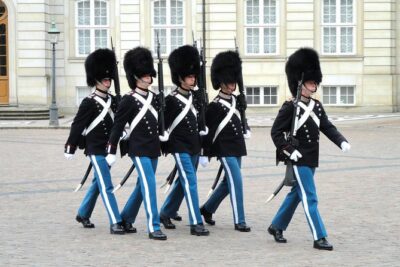
3h walking tour, small group max 10 people Copenhagen
Read our review →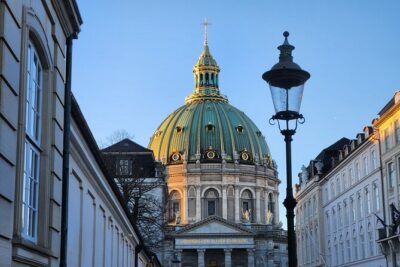
Walk & Canal Tour: Copenhagen Highlights + Changing of the Guards
Read our review →
Browse the lists this tour appears in