
Reviewed · CITY CARDS & ATTRACTION PASSES
Copenhagen Card – DISCOVER 80+ attractions and public transport
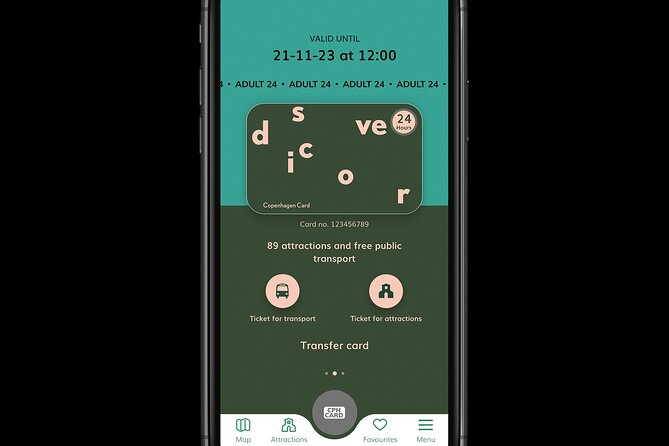
Copenhagen is best when you can roam. The Copenhagen Card is built for that, with free access to a big list of major attractions and unlimited public transport across the region for 24 to 120 hours. You redeem it digitally in the Copenhagen Card app by entering the barcode number, and the card stays valid for the exact number of hours from your first use.
I especially like how it bundles big-name classics with time-friendly extras, like Rosenborg Palace and the canal boat tour. It also pairs well with the city’s transit system, so you can jump from one museum to the next without doing math every time you open a ticket app.
One drawback to keep in mind: value depends on your pace. If you only hit a couple of paid sights, the card can feel pricey, and some popular places require advance booking for specific experiences, like climbing the tower at Our Saviour’s Church.
In This Review
- Key things to know before you commit
- Price and value: When the card stops being a gamble
- The redemption trick: Using the barcode number in the Copenhagen Card app
- Transit in Copenhagen region: what you gain and what to watch
- Planning your days by theme: center highlights plus easy excursions
- Copenhagen essentials: Zoo, Tivoli Gardens, Rosenborg, and Glyptotek
- Royal power and palaces: Christiansborg, Amalienborg, and the Frederiksborg option
- Canal time that feels like Copenhagen: Stromma Canal Tours
- Churches with real viewpoints: Our Saviour’s Church and booking the tower
- Beyond the center: Shakespeare in Denmark with Kronborg Castle
- Art museums for every mood: SMK, Louisiana, and Ordrupgaard
- Science, design, and architecture: Experimentarium, Designmuseum Danmark, DAC
- Vikings, cathedrals, and living history: Viking Ship Museum, Roskilde, Lejre
- Extra stops that make the card feel flexible: Cisternerne, Planetarium, Resistance
- Human bodies, natural worlds, and war museums: Medicinsk Museion, Natural History, Danish War Museum
- Transportation and attraction flow: a practical way to hit more with fewer trips
- A note on advance booking and pre-booked attractions
- Who this card is best for
- Should you book the Copenhagen Card DISCOVER 80+ attractions and public transport?
- FAQ
- How long is the Copenhagen Card DISCOVER valid?
- Do I get a physical card?
- How do I redeem the card?
- Is public transport included?
- Which attractions are included?
- Do I need to book anything in advance?
- Are there free spots for children?
- What is included with the purchase besides admissions and transport?
Key things to know before you commit

- Digital redemption is the whole system, so plan to have your phone charged and the Copenhagen Card app ready
- Hours start when you first use it, so you want your first tap or entry to be well timed
- You can mix huge attractions with smaller add-ons, which helps when you are deciding last-minute
- Several top sights include specific booking needs, so check what needs a timeslot
- Transit coverage is a big part of the payoff, especially if you plan to ride Metro, trains, and buses often
- Day trips can be worthwhile, since the card includes places outside central Copenhagen too
Price and value: When the card stops being a gamble

At the listed price of $95.96 per person, the real question is simple: will you use enough included admissions plus transit to beat buying everything separately? In a city like Copenhagen, tickets add up fast, and this pass is designed to remove that ongoing cost.
Here’s how I judge value for this card:
If you want a mix of at least three to five paid attractions and you also expect to ride public transport repeatedly in a short stay, it usually makes sense. If your plan is mostly walking, a single museum, and one paid attraction, you might do better with individual tickets.
The card also helps you avoid decision fatigue. When you are not constantly checking prices, you can pivot based on weather. If rain hits, you can switch from outdoor sights to indoor museums and still feel like you are using your money well.
More city cards and passes worth the maths:




The redemption trick: Using the barcode number in the Copenhagen Card app
This is a fully digital card. After you choose a 24-, 48-, 72-, 96-, or 120-hour option, you type in the barcode number in the Copenhagen Card app on your smartphone to redeem it. Your hours run from the moment you first use it.
A few practical habits make this smoother:
- Start your first use when you are ready to go, not too early.
- Keep your phone accessible for entry and transit validation.
- If you are visiting on a tight schedule, charge your phone the night before.
One more caution: once activated, the card is personal and non-refundable, and you do not get replacements if you lose your phone or it gets damaged. So treat your phone like a ticket wallet.
Transit in Copenhagen region: what you gain and what to watch
The card includes free public transport throughout the Copenhagen region, including buses, trains, and Metro. That matters because Copenhagen’s best sightseeing is spread out. You can do a palace in the afternoon and still reach a museum north of the center without planning your entire day around walking distances.
Still, Copenhagen’s rail system can feel confusing at first. I’d suggest you get comfortable with how the Metro and the different train types work early in your trip, so you do not waste time on the wrong platform. The card removes the fare cost, but it does not remove the need to take the correct route.
Also, be aware that station validation can be fussy in real life. I’ve seen reports that the Metro tap screen can fail to recognize transport QR codes. If that happens to you, slow down, check what the staff advise, and be prepared to handle transit validation the moment you arrive at the station rather than assuming everything will scan the first time.
Planning your days by theme: center highlights plus easy excursions

This card is ideal if you like to structure your trip by “themes” instead of logistics. Copenhagen can be very walkable in the core, but your best savings comes when you combine transit rides with included admissions.
A workable approach:
- Day 1, city core: Zoo, Tivoli Gardens, Rosenborg, plus nearby art museums.
- Day 2, royal and historic sites: Christiansborg, Amalienborg, Frederiksborg (day trip option).
- Day 3, modern and museums: SMK, Louisiana (day trip), plus design and architecture stops.
Because the card includes some sites outside Copenhagen, you can also do a “north day” (like Humlebæk for Louisiana) or a “nearby classic day” (like Roskilde-area Viking and cathedral stops). You get flexibility, and you can keep your day from collapsing if one venue is closed or your timing slips.
Even more Things to Do in Copenhagen
- Private Walking Grand Tour of Copenhagen
★ 5.0 · 3,953 reviews - From Copenhagen: Lund and Malmö 2-Country Tour
★ 4.7 · 3,807 reviews - Copenhagen Highlights Walking Tour
★ 5.0 · 2,324 reviews
Copenhagen essentials: Zoo, Tivoli Gardens, Rosenborg, and Glyptotek
If you have never been to Copenhagen, start with the big energy stops. They set the tone fast.
Copenhagen Zoo gives you more than 4,000 animals from around the world in state-of-the-art facilities. It is a strong pick because it works for a range of ages and you can move at your own speed. If you love animals, it can easily become your anchor experience for a half to full day.
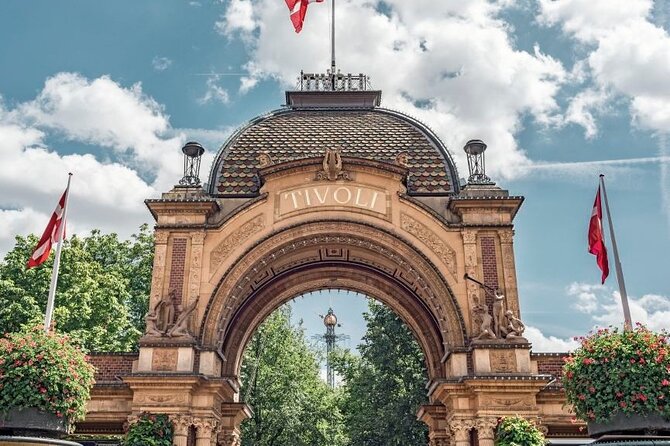
Tivoli Gardens is one of Europe’s oldest amusement parks. It is the kind of place that turns a sightseeing trip into a memory. If weather is good, prioritize it earlier in your day so you do not lose time to crowds or closures.
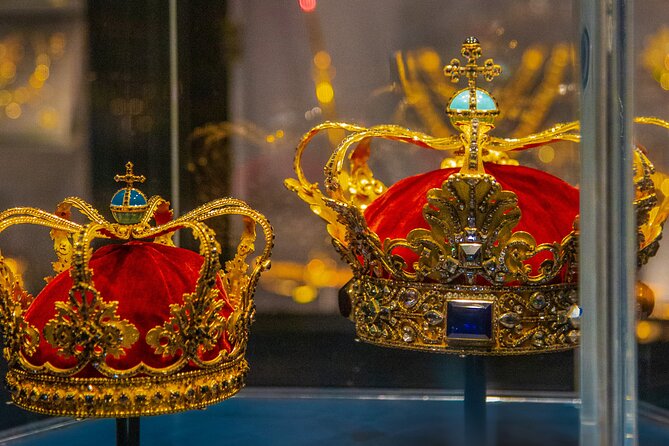
Rosenborg Palace is where the Crown Jewels live, and it is a true classic built by King Christian IV in the 1600s. Even if you do not care about royalty, it is one of those interiors that helps you understand Danish history through the objects and room layouts.
Ny Carlsberg Glyptotek is a different mood. It mixes archaeology and art, with collections that include Ancient Egypt, Ancient Greece and Rome, and Etruscan culture, plus Danish and French 19th-century art. This is a great “rain plan” or a calm counterweight to all the palace time.
Royal power and palaces: Christiansborg, Amalienborg, and the Frederiksborg option
This is where Copenhagen becomes a story about Denmark’s institutions, not just pretty buildings.
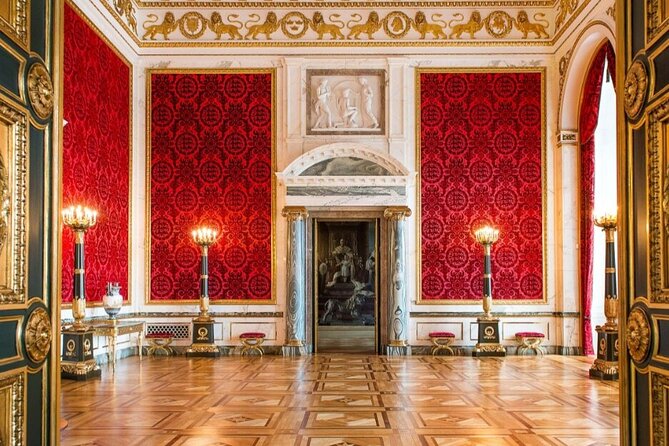
Christiansborg Slot is the official seat of the Queen. It fits well if you like government and ceremony mixed with museum-style exploration. It also pairs nicely with nearby historic sights since you will already be thinking “center city.”
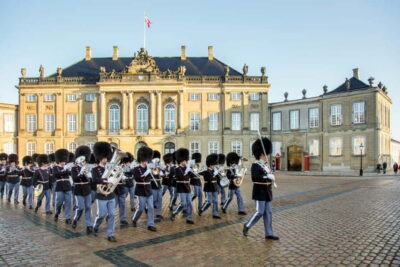
Amalienborg Palace Museum lets you step inside recreated royal palace interiors. It is a smart included stop because it turns the idea of royal life into spaces you can actually walk through.
If you can spare a longer ride, Frederiksborg Castle (in Hillerød) is a standout day trip choice. It is an impressive Renaissance castle built in the early 1600s by Christian IV, and it houses the Museum of National History. One detail I like here is the emphasis on interiors and portrait collections, including a note that the portrait collection is the largest and most significant in Denmark. If you like museums that use rooms to tell a timeline, this is a good fit.
Canal time that feels like Copenhagen: Stromma Canal Tours
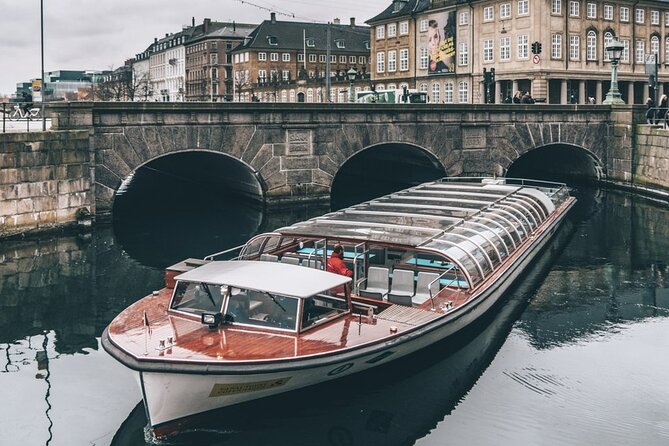
For a card packed with indoor options, the Stromma Canal Tours stop is a reminder that Copenhagen is also a water city. The tour is described as the original canal boat tours around Copenhagen’s canals, and it is one of those activities that quickly makes the city feel navigable.
This is a good “first day” activity too. After you ride the canal, you tend to recognize neighborhoods and landmarks faster when you later visit museums or castles.
Churches with real viewpoints: Our Saviour’s Church and booking the tower
Our Saviour’s Church is famous for its serpentine spire, inaugurated in 1752, and you can climb to the top via the 400 steps. Here’s the practical catch: the entrance to the church is free, but if you want to climb the tower, you must book in advance.
That means you should not treat the tower as a spontaneous add-on. If tower time matters to your trip, plan it earlier than you think you need to.
Beyond the center: Shakespeare in Denmark with Kronborg Castle
Kronborg Castle is in Elsinore, north of Copenhagen, and it sits at the entrance to Øresund. It was built between 1574 and 1585 and is described as one of northern Europe’s finest Renaissance castles.
You probably know it because Shakespeare’s Hamlet made it famous. Even if you are not a literature person, this is still a strong included stop because it ties setting, sea access, and period architecture together.
Art museums for every mood: SMK, Louisiana, and Ordrupgaard
Copenhagen can deliver art in many styles, from Danish classics to international modernism.
SMK, the National Gallery of Denmark, is Denmark’s largest art museum and sits just off Nørreport station. It covers seven centuries of art plus special exhibitions and royal collections. It’s a smart choice if you want a single museum stop to do a lot of work. The card listing also calls out artists you may recognize, including Munch, Matisse, Mantegna, Rubens, and Hammershøi.
If you want modern art plus scenery, Louisiana Museum of Modern Art (about 40 km north of the city center in Humlebæk) is a top pick. It combines art, nature, and architecture, and you get panoramic views of the Sound. The listing highlights permanent points like the Giacometti Hall and the Jorn Room, plus regular access to one of Kusama’s Infinity rooms. If you like museums where the building and park matter as much as the art, you will likely love this one.
For a more peaceful art day, Ordrupgaard Art Museum sits about 10 km north of Copenhagen and is described as scenic and calm. It has major French Impressionist names like Monet, Degas, and Gauguin, plus Danish art that focuses on Vilhelm Hammershøi and contemporaries. It is the kind of museum where you can slow down and actually look.
Science, design, and architecture: Experimentarium, Designmuseum Danmark, DAC
If you are traveling with kids, or you just like curious hands-on experiences, the card’s science and design choices are useful.
Experimentarium is a hands-on science center in Hellerup, around 6 km north of Central Copenhagen. It is built for play and discovery, so you are not stuck watching glass cases for hours.
Danish Architecture Center (DAC) is in BLOX on the waterfront, and it is a good “start here” museum if you want a structured introduction to Copenhagen and Danish architecture. It covers exhibitions, guided tours, and events around historic icons and newer design.
Designmuseum Danmark focuses on Danish design, and the card description emphasizes it as a working archive with a large collection of Danish design. Names like Arne Jacobsen, Finn Juhl, Poul Kjærholm, Verner Panton, and Hans Wegner appear in the listing. If you like seeing design as something built by people and industries, not just aesthetic objects, this is a satisfying stop.
Vikings, cathedrals, and living history: Viking Ship Museum, Roskilde, Lejre
The card includes multiple history stops that move beyond “royal portraits and castles.”
Viking Ship Museum in Roskilde features five 1000-year-old original ship finds from the Viking Age, known as the Skuldelev Ships. It also has sailing reconstructions, plus crafts and activities linked to old maritime trades. If you like history that feels physical, with ships and tools, this is compelling.
Roskilde Domkirke adds a long-view contrast. It is described as a UNESCO World Heritage site, with around 1000 years of Danish history and about 40 kings and queens buried beneath decorated vaults and in crypts.
And if you want a more “time travel” style day, Lejre Land of Legends is an open-air museum with reconstructions, including a large Viking Kings Hall and reconstructed settlements and workshops across Iron, Stone, and Viking Ages. It is a great option when you want history outside, not only behind museum walls.
Extra stops that make the card feel flexible: Cisternerne, Planetarium, Resistance
Not every included attraction is a museum you need to force yourself to love. Some are smart breaks.
Cisternerne is an art gallery inside an underground water reservoir beneath Søndermarken Park. It is described as cold, humid, and dimly lit, designed for contemporary art installations. It’s also a cool way to beat Copenhagen’s changing weather.
Planetarium has a dome described as the largest tilted dome in Europe, plus 8K visualization and a sound system. The card includes the exhibitions and one movie in the dome. It’s a good option when you want something family-friendly that is not dependent on walking distances.
For something more intense, Museum of Danish Resistance takes you underground and recreates the WWII resistance fight, with scenes involving sabotage, illegal newspapers, code work, and intercepted calls. It is the kind of museum where the setting helps you feel the stakes.
Human bodies, natural worlds, and war museums: Medicinsk Museion, Natural History, Danish War Museum
If your group likes museums that teach in a direct way, these included choices are strong.
Museum of Natural History is built around minerals and nature, including the chance to touch a huge meteorite from outer space. It is the kind of museum that makes learning feel playful.
Medicinsk Museion is called out as a must-see for people curious about the human body and diseases, with exhibitions ranging from antiquity to the genomic age. It is housed in the historic Royal Academy for Surgeons from 1787, so the setting matches the topic.
Danish War Museum spans Danish war history from the 1500s until today. The listing calls out artifacts like samurai swords and armor suits, plus ship models and modern drones. If you want history that connects to technology and consequences, this fits well.
Transportation and attraction flow: a practical way to hit more with fewer trips
The card’s best feature is not just free tickets. It is the permission to design a day around what you feel like doing.
Here are a few tactics I recommend:
- Cluster stops by transport line and geography. Your list will look shorter and your day will feel longer.
- Use the canal tour and central palaces as “anchors,” then fill the gaps with nearby museums.
- Reserve your booking-dependent experiences early. The tower at Our Saviour’s Church needs advance booking, and some other featured sites in the card listing also require pre-booking.
- If Mondays matter to your schedule, build a plan that includes indoor backup choices. Some of the included attractions can close on Mondays, so your best move is to check and plan before you commit to a day.
A note on advance booking and pre-booked attractions
Two included examples are explicit about needing planning:
- Climbing the tower at Our Saviour’s Church requires a prior booking.
- Home of Carlsberg requires pre-booking, and your card must be active before booking since you need the card number.
If you are traveling at peak times or have one must-do experience, don’t wait until the day you arrive.
Who this card is best for
This card is a great fit if:
- You want a short trip that includes several major attractions, not just one highlight.
- You plan to ride public transport multiple times a day.
- You are comfortable using a phone app for ticket redemption.
- Your group includes kids or mixed ages, since the included options range from science and planetarium to classic palaces.
It is less ideal if:
- Your plan is light on paid admissions.
- You hate depending on your phone for confirmations.
- You only have time for a couple of included sights.
Should you book the Copenhagen Card DISCOVER 80+ attractions and public transport?
Book it if you want maximum flexibility and you are likely to use the transit plus multiple admissions. With included classics like Zoo, Tivoli Gardens, Rosenborg, canal touring, major art museums like SMK, and serious modern stops like Louisiana, it gives you a lot of “yes” options without checking prices every time.
Skip it if your schedule is very compact or you are more into walking around than paying for museums. In that case, individual tickets might cost less and feel less stressful.
If you do book, I’d choose your hour window based on how many paid stops you realistically want, then plan your first use so the clock starts when you actually begin sightseeing. That small move can make the difference between feeling like a bargain and feeling like you barely used it.
FAQ
How long is the Copenhagen Card DISCOVER valid?
You choose a card for 24, 48, 72, 96, or 120 hours. The validity runs for the stated number of hours starting from when you first use the card.
Do I get a physical card?
No. There is no physical card. It is redeemed through the Copenhagen Card app using your barcode number.
How do I redeem the card?
Download the Copenhagen Card app, then type in the barcode number in the app to redeem your card.
Is public transport included?
Yes. The card includes complimentary travel on the city’s buses, trains, and Metro services throughout the Copenhagen region.
Which attractions are included?
The card includes free entrance to a long list of major attractions and museums, including places such as Copenhagen Zoo, Tivoli Gardens, Rosenborg Palace, Stromma Canal Tours, Christiansborg Slot, Amalienborg Palace Museum, and many others.
Do I need to book anything in advance?
Some included experiences require advance booking. For example, climbing the tower at Our Saviour’s Church requires booking in advance, and Home of Carlsberg requires pre-booking.
Are there free spots for children?
Yes. Each adult can bring up to 2 children aged 3 to 11 for free, as long as you add the free kids cards to the cart when buying your own card.
What is included with the purchase besides admissions and transport?
You also get a Copenhagen city map along with the free entrance and regional public transport.
The latest around Copenhagen
- Copenhagen: Guided Tour of Vesterbro and Christianshavn★ 5.0 · 1 review
- Stevn Klint UNESCO Heritage Tour and Vikingborg Fort.★ 5.0 · 1 review
- Historical Pod Walk Tour on the Slaves of Copenhagen★ 5.0 · 1 review
- Castle Island’s Royal History: A Self-Guided Audio Tour of Slotsholmen★ 5.0 · 1 review
- Copenhagen Old Town, Nyhavn, Canal Walking Tour & Christiana★ 5.0 · 1 review
- Queer Copenhagen Historical Tour★ 5.0 · 1 review
City Cards & Attraction Passes, compared.
Copenhagen Card-Discover: 80+ Attractions & Public Transport
Read our review →
Hop-On Hop-Off Bus Tour with Boat Tour Option
Read our review →
City Sightseeing Copenhagen Hop-On Hop-Off Bus Tour
Read our review →
City Card with 40+ Attractions & Hop-On/Off Bus
Read our review →
Browse the lists this tour appears in