Reviewed · GUIDED
Copenhagen Architecture and Sustainability Tour with local Guide
Bike lanes and big ideas meet here. This Copenhagen architecture and sustainability ride takes you beyond the obvious sights, using local expertise and bike-friendly routes to show how the city thinks about people, water, and long-term change.
I love two things most. First, the small group size, capped at 15, keeps the ride relaxed and puts your guide within reach when questions pop up. Second, the best kind of bonus, lots of stops are free to enter, from Blox and the architecture exhibitions there to the harbor bath experience.
One thing to plan around: the tour depends on good weather, and some central harbor areas can feel packed at peak times, so a little patience helps.
In This Review
- Key things to know before you ride
- Price and what you get for $72.57
- The ride itself: start point, distance, and how it feels
- Blox and DAC: when sustainability includes social design
- Harbor crossings and the Copenhagen model of public waterfronts
- Tietgen Residence Hall: housing that builds community
- Folkehuset Absalon: a reused church with community purpose
- Amagerfælled and Enghave Park: nature on reused ground, plus stormwater smarts
- Ørstedsparken: reuse of old defenses into a park with a lake
- DR Koncerthuset: culture in a purpose-built building
- Kødbyen and Israels Plads: industry, sanitation, and today’s food scene
- Getting the bike right: included, plus optional upgrades
- Who this Copenhagen bike tour is best for
- Final call: should you book this tour?
- FAQ
- What is the duration and how much do you cycle?
- What is included in the price?
- Are there any extra costs for bike add-ons?
- Is the tour available in English?
- Where does the tour start and end?
- Is the tour dependent on weather?
Key things to know before you ride
- A sustainability theme you can feel on a bike, not just hear through facts
- About 11 km of cycling in roughly 3 hours, with short stops to reset your legs
- Free admission at every listed stop, so you pay for the tour, not museums
- Built-in local context, from housing that shares common rooms to parks redesigned for storms
- Helmets are available upon request, plus optional upgrades if you want a different bike setup
Price and what you get for $72.57
At $72.57 per person for about 3 hours, this tour is priced like a solid guided activity, but it earns its keep. You’re not just getting a lecture. You get a bicycle included, a local guide, and a planned loop of architecture and city-planning stops, with roughly 11 km of biking between them.
What makes the value better is the mix of payoff per hour. You see modern, practical sustainability ideas (bike crossings, stormwater-minded parks, reuse of older structures) while moving through the city efficiently. For time-poor visitors, that’s the big advantage over slow walking.
Also, free entry at the stops means you’re not paying extra once you’re on the route. And because it’s a maximum of 15 people, it tends to feel like a real outing, not a cattle-car ride with one-way answers.
If you’re the type who likes details, bring curiosity. The guide’s explanations make the architecture feel less abstract and more useful to everyday life.
Even more Things to Do in Copenhagen

The ride itself: start point, distance, and how it feels
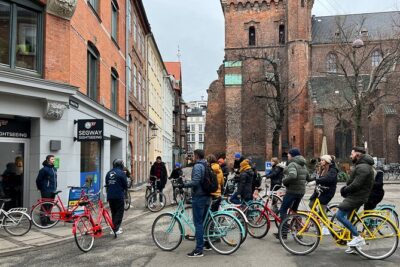
The tour starts and ends back at Vester Voldgade 2, 1552 København. It runs in English, uses a mobile ticket, and is best suited to people with moderate fitness.
You should expect about 1 hour of active cycling plus short, focused stop time across the route. Altogether, it’s roughly 11 km of biking. That’s not marathon miles, but it is enough that you’ll want to dress for comfort and not wear anything you wouldn’t be happy to sweat in.
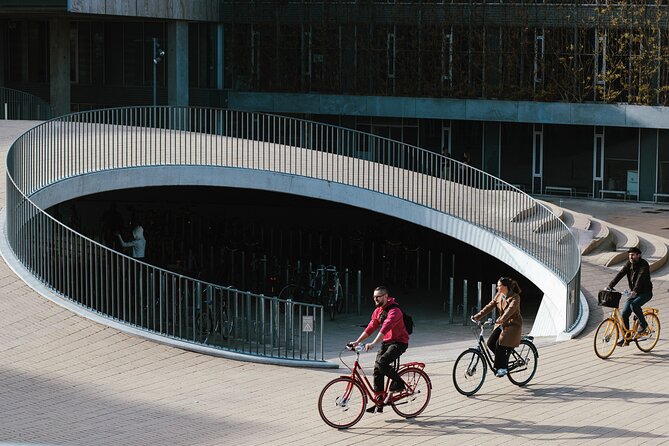
The good news: Copenhagen is built for bikes, and this route leans on that. You’ll cycle confidently along bike-focused streets with your guide there to keep the flow smooth and help you understand what you’re seeing as you pass it.
One more practical point. There are toilets at the store where you meet up. Plan to use them before the ride begins, then just enjoy the momentum.
Blox and DAC: when sustainability includes social design
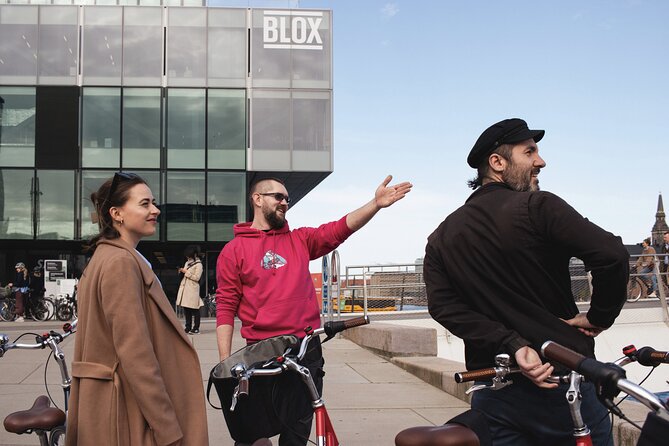
The first stop is Blox, a mixed-use building developed with sustainability in both technical and social ways. That wording matters. Sustainability isn’t only energy systems and materials. It also covers how a building behaves as a community tool.
Blox’s most visible renter is DAC. DAC hosts architecture exhibitions where you can get a sense of what’s relevant in Copenhagen right now, not just generic textbook history. In other words, this stop helps you frame the rest of the ride.
Why I like starting here: you get a quick mind-set shift. Instead of seeing buildings as isolated objects, you start looking for questions the city asks, like: Who uses this space? How does it connect people? What long-term choices does it reflect?
Tip for this stop: if there’s an exhibition on Copenhagen architecture running at the time of your visit, use it. It’s a fast way to make the outdoor stops stick in your head.
Harbor crossings and the Copenhagen model of public waterfronts
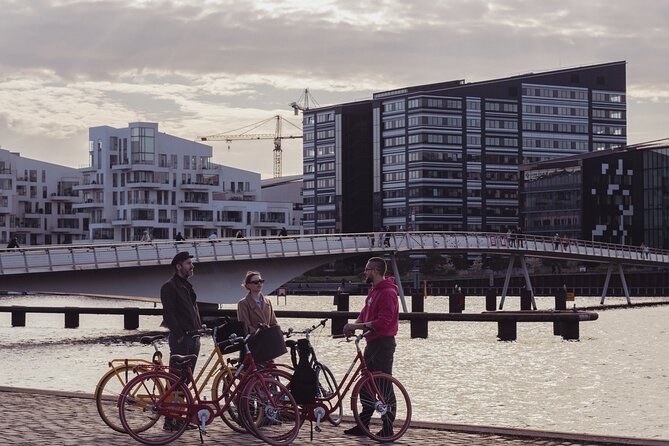
A big chunk of the charm here is how the route ties sustainability to water and movement.
You’ll pass Lille Langebro, a new-ish bridge that connects pedestrians and cyclists across the harbor. Copenhagen keeps expanding these links as part of a broader goal: turning the old merchant and navy harbor areas into places for people to spend free time.
Next comes Havnebadet on Islands brygge. When the harbor bath opened in 2003, it marked a major shift in how Copenhagen relates to its waterfront. You’re not just looking at water from a distance. You’re seeing it as usable, even recreational.
Then you reach the idea of bike-first infrastructure at Cykelslangen. The bridges Cykelslangen and Bryggebroen were among the first new harbor crossings built exclusively for cyclists. That’s not a small detail. It’s the city’s commitment in physical form, creating safe, direct movement where cars and chaos are not the default.
The only caution: harbor areas can get crowded in summer. If you’re sensitive to congestion, be mentally ready to slow down at the more popular spots.
Still, this sequence is one of the strongest “aha” moments of the tour, because you see how transport design becomes public policy, and public policy becomes daily life.
A handful of other Copenhagen bookings
- Copenhagen: Highlights 3 Hour Bike Tour with a Local Guide
★ 4.8 · 2,312 reviews - Copenhagen Sightseeing Classic Canal Tour With Live Guide
★ 4.5 · 1,906 reviews - Copenhagen Highlights 3 Hour Bike Tour with local Guide
★ 5.0 · 1,125 reviews
Tietgen Residence Hall: housing that builds community
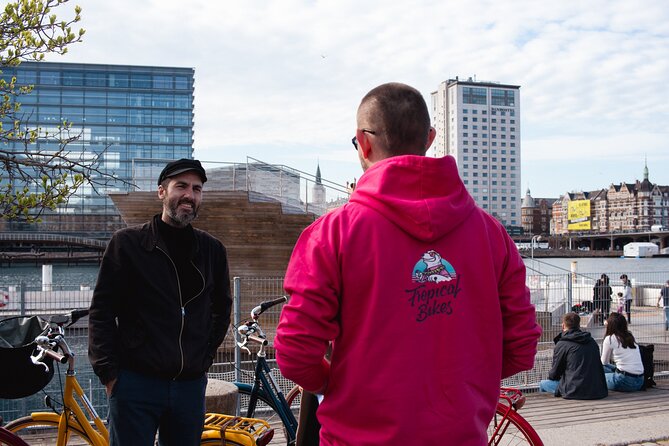
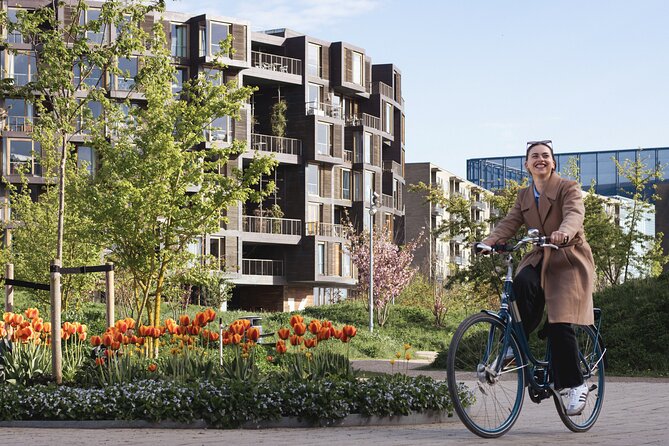
The Tietgen Residence Hall is a clear example of social sustainability. The building is designed to support personal development of about 400 inhabitants, and it balances the individual with the community.
Here, the practicality is part of the story. Rooms are small and include a washroom, while daily life is supported through shared spaces like living rooms and kitchens, which some or all inhabitants share.
What to notice as you look around, even from a distance: this isn’t just “group housing.” It’s structured living designed to reduce isolation and encourage shared routines.
If you like sustainability that goes beyond panels and pipes, this stop delivers. It shows a city planning idea that many visitors miss: sustainability is also about reducing friction in everyday life, and building spaces where people can thrive without needing everything private and separate.
Folkehuset Absalon: a reused church with community purpose
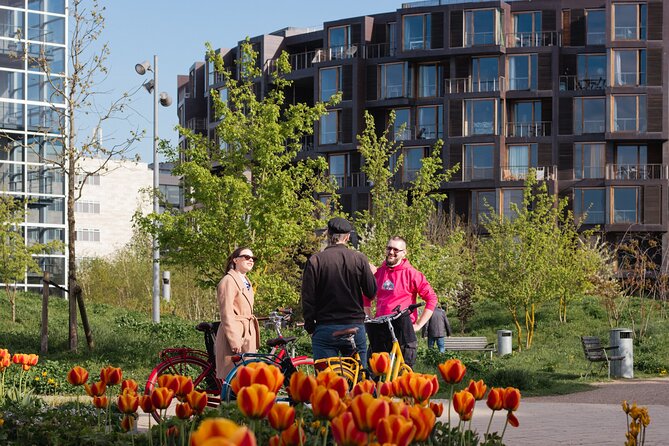
From student-life energy to community-center calm, you’ll visit Folkehuset Absalon, a former church converted to a privately run community center.
This is reuse you can understand quickly. A church already has volume, circulation, and gathering-room shape. Reusing it avoids wasting embodied building value and gives a structure a second life.
The sustainability angle here is simple but powerful. Adaptive reuse keeps older buildings relevant, and it keeps energy and materials from going to waste.
If you’re the type who enjoys places that feel lived-in, not staged, this stop is a good emotional break from the more “system” focused architecture you’ll see elsewhere.
Amagerfælled and Enghave Park: nature on reused ground, plus stormwater smarts
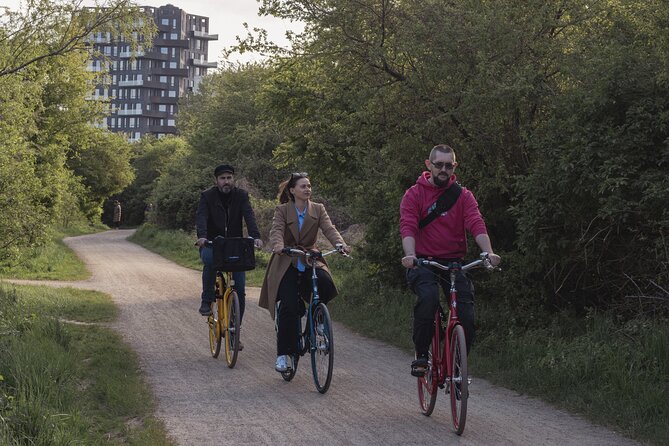
Now for the outdoors stops, where the sustainability theme turns physical.
Amagerfælled used to serve military purposes, with training and shooting range activity reaching into the 1700s through the 1950s. After that, the area became a garbage dump, which is why Copenhageners joke about it as lorteøen, shit island. Today, you get something unusual: relatively untouched nature in a city, even though a lot of the land is on artificially reclaimed ground.
This is a reminder that nature in a city is not always pure and untouched in the romantic sense. It’s often engineered, rebuilt, and reinterpreted. And that’s exactly what makes this stop interesting.
Then you’ll see Enghave Park. It was built in the late 1920s on former allotment gardens, laid out in a neoclassical style with a bandstand, playground, and sports fields. Between 2017 and 2019, it went through a redesign intended to play a main role in managing torrential rains in Copenhagen.
So you’re not just touring a park. You’re touring stormwater thinking in public space. It’s sustainability you can feel during a rainy day, even if you’re standing in a sunny moment now.
Ørstedsparken: reuse of old defenses into a park with a lake
Another strong reuse story is Ørstedsparken. This park is an early example of reuse, once part of Copenhagen’s defenses outside the walls. After the city wall was demolished, the site became a park, and parts of the former moat were retained as a lake inside.
The terrain also matters. Expect dramatic hills and crooked paths, which makes the place feel less like a flat green rectangle and more like a real walking route you’ll want to explore slowly.
This stop fits the tour’s larger message: sustainability isn’t always brand-new construction. Sometimes it’s the decision to repurpose a structure and let history shape how people move through green space.
DR Koncerthuset: culture in a purpose-built building
DR Koncerthuset gives you a different kind of sustainability lens: how a city creates long-term public value through cultural institutions.
The building houses a concert hall with 1,800 seats. It’s home to the Royal Symphony Orchestra, and it includes smaller stages and recording studios.
Why it belongs on an eco-focused tour: it shows that sustainability includes what a city invests in over decades. If people gather for music, education, and performance, those uses keep buildings and neighborhoods active, and they reduce the pressure to continuously rebuild for new purposes.
If you love architecture you can read as a function, this one is satisfying. Big hall, structured purpose, and clear connection to public life.
Kødbyen and Israels Plads: industry, sanitation, and today’s food scene
The route ends with a look at industrial architecture and then a hop into food-meeting-point energy.
At Meatpacking District, Kødbyen, you’re seeing historic industrial planning. The city planned the area to create sanitary and healthier conditions for meat business as Copenhagen grew. Over time, the district expanded through additions until it reached its impressive size, showing industrial architecture from the 19th and 20th centuries.
Next is Israel’s Square (Israels Plads) and the adjacent Torvehallerne. This is a modern meeting point for food lovers. The history is fun and practical: a farmer’s market existed here during the period when the city ended its strict no-building policy around the end of the 1890s, continuing until the 1950s, when the entire area turned into a parking lot.
Even without going into every timeline detail, you can feel the pattern. Copenhagen uses central space for what people need most, then adapts as priorities change.
If you’re doing this tour and also want a nearby plan for lunch or snacks, this is the right moment to think about food. The square and market area are designed for people to linger.
Getting the bike right: included, plus optional upgrades
The tour includes use of a bicycle, and children bikes in different sizes are available if you contact the provider for availability. You can also request free bike helmets.
If you want a different setup, bike extras like phone holders and baskets can be booked for an extra fee of 49 DKK per item. There are also special bike upgrades such as cargo/tandem (449 DKK), e-bike (249 DKK), e-cargo (649 DKK), and child-seat (119 DKK).
If you’re deciding what to bring, keep it simple. A standard daypack is plenty. If your phone matters for photos, consider the holder option rather than trying to balance it in your hand.
Who this Copenhagen bike tour is best for
This tour is a strong fit if you want Copenhagen to make sense quickly. It’s ideal for:
- People short on time who still want real context, not just viewpoints
- Anyone who likes architecture, urban planning, and how public spaces affect daily life
- Families or groups who want a relaxed small-group pace and an active way to see the city
- Visitors who like to learn on the move, especially with a guide close by
It’s less ideal if you hate biking at all, or if you struggle with moderate physical fitness for about 11 km.
Also, if you’re picking a tour day, aim for weather that feels comfortable for cycling. The experience requires good weather, and on a bad weather day you may have to switch dates.
Final call: should you book this tour?
I think this one is an easy yes for the right person. You’re getting guided architecture and sustainability in the most Copenhagen way possible, by bike. The small-group cap of 15 plus the free entry stops make it feel like you’re spending money on experience, not tickets.
Book it if you want a fast route through the city’s modern ideas, from Blox to the harbor crossings, from shared-living housing to parks built to handle storms.
Skip or pick another option if you need a very low-activity plan, or if crowded central harbors are a big stress point for you. And if you can, pick a day with calm weather so the biking part feels like a treat, not a chore.
FAQ
What is the duration and how much do you cycle?
The tour lasts about 3 hours, with roughly 11 km of biking between stops.
What is included in the price?
You get a bicycle, local guide, free bike helmets upon request, and access to toilets at the store. Children bikes in different sizes are also available if you contact the provider.
Are there any extra costs for bike add-ons?
Yes. Bike extras like phone holders and baskets are available for an extra fee of 49 DKK per item. You can also reserve special bike upgrades like e-bikes, cargo or tandem bikes, and child-seats for additional fees.
Is the tour available in English?
Yes, the tour is offered in English.
Where does the tour start and end?
It starts at Vester Voldgade 2, 1552 København, Denmark, and ends back at the same meeting point.
Is the tour dependent on weather?
Yes. The experience requires good weather, and if it’s canceled due to poor weather you’ll be offered a different date or a full refund.
The latest around Copenhagen
- Copenhagen: Guided Tour of Vesterbro and Christianshavn★ 5.0 · 1 review
- Stevn Klint UNESCO Heritage Tour and Vikingborg Fort.★ 5.0 · 1 review
- Historical Pod Walk Tour on the Slaves of Copenhagen★ 5.0 · 1 review
- Copenhagen Old Town, Nyhavn, Canal Walking Tour & Christiana★ 5.0 · 1 review
- Queer Copenhagen Historical Tour★ 5.0 · 1 review
- Castle Island’s Royal History: A Self-Guided Audio Tour of Slotsholmen★ 5.0 · 1 review
Guided, compared.
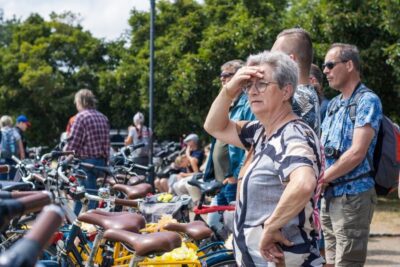
Highlights 3 Hour Bike Tour with a Local Guide
Read our review →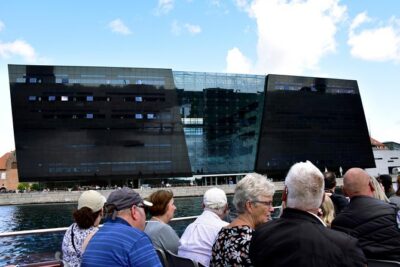
Copenhagen Sightseeing Classic Canal Tour With Live Guide
Read our review →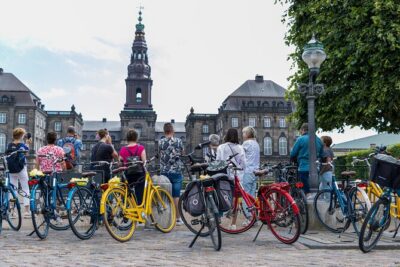
Copenhagen Highlights 3 Hour Bike Tour with local Guide
Read our review →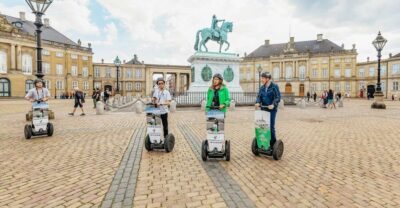


Guided Party Pub Crawl with 4 Shots and 1 Drink
Read our review →
Segway Tours Copenhagen w. Guide & Concierge Service. 2 Hours+
Read our review →