

Reviewed · FREETOWN CHRISTIANIA WALKS
Copenhagen Alternative Private Tour: Vesterbro & Christianshavn
Copenhagen has a way of hiding its best stories in plain sight. This private tour strings together Vesterbro and Christianshavn so you see how everyday streets connect to fortifications, theaters, markets, resistance radio, and modern community life. It moves at a human pace, with a guide who brings the neighborhood details into focus.
What I really like is how the route blends “what you see” with “why it’s here,” especially the WW2 material on Istedgade and the resistance use of BBC broadcasts through loudspeakers. I also love the optional tasting stop in a traditional Danish restaurant, because it turns your walk into a small break with local flavor. One drawback to plan for: the guide cannot enter Freetown Christiania, so you’ll only get viewpoint context before you explore on your own.
In This Review
- Key highlights worth your time
- Two neighborhoods, one Copenhagen story
- Viktoriagade and the street that covered a moat
- Det Ny Teater, and why theaters shaped street life
- Værnedamsvej and Saxogade, names with real-world origins
- Skydemuren and Istedgade, from bullet traps to WWII refuge
- Istedgade 31 and the sound of resistance
- Meatpacking District, Oksnehallen, and the city’s old market muscle
- Men’s Home and Maria Church, social support built into the map
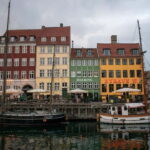
- København H and Knippelsbro, the crossing into Christianshavn
- Christians Kirke, Strandgade 4, and Asiatisk Plads
- Sankt Annae Kirke and the old house rows
- Wilders Plads, naval hospice history, and the defense zone idea
- Church of Our Saviour and the climb you might want
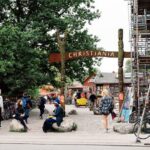
- Freetown Christiania: context first, then your own choice
- Price and what $147.96 buys you in real terms
- Small practical tips for a smooth walk
- Should you book Copenhagen Alternative Private Tour: Vesterbro and Christianshavn?
Key highlights worth your time
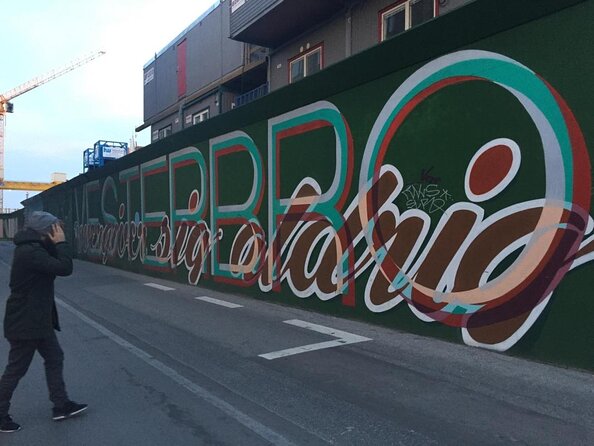
- Viktoriagade built over old fortifications and a moat, with 1800s charity buildings along the way
- Det Ny Teater (1908), plus the theater’s role in creating a passage between old and new street areas
- Istedgade WW2 details, including the Danish resistance slogan and the Stjerne Radio broadcast story
- Meatpacking District classics, like Oksnehallen (1891) and the haymarket era of Halmtorvet
- Christianshavn architecture and meaning, from rococo Christians Kirke to the baroque Church of Our Saviour
- Freetown Christiania context first, then you explore the self-governed neighborhood independently
Two neighborhoods, one Copenhagen story
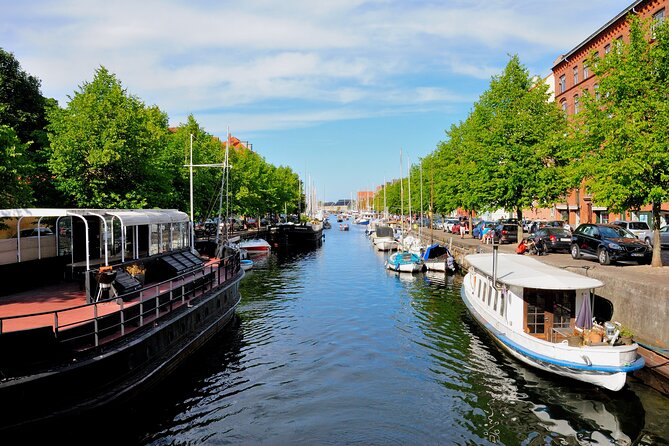
If you want Copenhagen beyond the postcard core, this tour is a smart way in. Vesterbro and Christianshavn can feel like cousins, not clones. The streets look simple until someone connects the dots for you, like how a street layout grew from fortifications, or how a market district shifted from cattle and hay logistics to modern eating and nightlife.
This is a private walking tour, about 3.5 to 4 hours, so you can ask questions and slow down when something grabs your attention. The pace is approachable, and the stops are short enough that you keep energy for the next block. Also, the tour is offered in English and uses a mobile ticket, which makes the start smoother.
And yes, this is the kind of route where the city starts “talking back.” You’ll notice names that sound odd, streets that look ordinary, and buildings you might otherwise pass without noticing, then realize they were doing serious work for the city.
More of Christiania and Christianshavn on foot:
Viktoriagade and the street that covered a moat
The tour begins at Viktoriagade, and the setting is already a lesson in how Copenhagen repurposes old defense structures. Long ago, this area related to fortifications created under Christian IV in the early 1600s, with those defenses protected by a moat. Much later, redevelopment changed the water situation, and the moat became less pretty and more polluted.
The turning point was deciding to place the famous street over the old moat. That one decision explains why the street feels like it’s always been there, even though the land beneath it has been through several identities. Along Viktoriagade you also get mid-1800s charity-related buildings, including listed structures at numbers 8, 10, and 12 that are protected in Denmark’s register.
Practical note: this is a great first stop because it sets the tone. You start noticing how the city layers time, not just buildings.
Det Ny Teater, and why theaters shaped street life
Next comes Det Ny Teater, a large theater opened in September 1908. What I like here is that the tour doesn’t treat it as a standalone landmark. It also explains the construction idea: build a major theater and, at the same time, open a passage between Gammel Kongevej and the new Vesterbro Passage that later became part of Vesterbrogade.
That matters because it shows how architecture affects movement. Streets become shortcuts, not just scenery. If you enjoy cities as networks, you’ll appreciate this stop for the way it connects cultural life with urban planning.
Even if you’re not a theater person, this is a nice reset between history-heavy corners, and it’s easy to connect what you’re seeing with how Copenhagen “flows.”
Værnedamsvej and Saxogade, names with real-world origins
On Værnedamsvej, the street name ties back to a beer collector, Werner Dam, who acquired land in the 1700s and opened a popular beer garden. The street also carried the nickname Slagtergaden, literally Butchers’ Street, because of the sheer number of butchers there.
This is one of those stops that teaches you to read a street name like a tiny archive. You start imagining the local economy in motion, not just tourists taking photos.
Then the tour shifts to Saxogade, where residents protested poor housing conditions. In the early 1950s, people sent a big letter of protest because their neighborhood had miserable housing, especially for children. The context is heavy: families lived in overcrowded, small one-room apartments, sometimes sleeping up to 10 people.
That’s the tour’s balancing act: it keeps the pace light and the stops short, but it doesn’t sanitize the past. If you’re the type who likes civic history, this part hits.
Even more Things to Do in Copenhagen
- Copenhagen Card-Discover: 80+ Attractions & Public Transport
★ 4.6 · 5,351 reviews - Copenhagen: Hop-On Hop-Off Bus Tour with Boat Tour Option
★ 3.9 · 4,122 reviews - Private Walking Grand Tour of Copenhagen
★ 5.0 · 3,953 reviews
Skydemuren and Istedgade, from bullet traps to WWII refuge
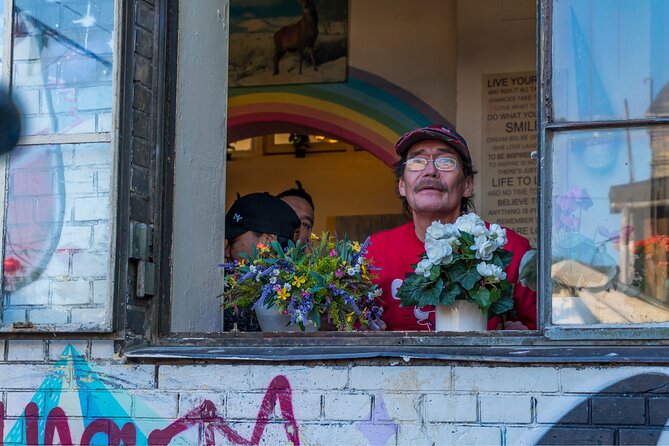
Now you get the kind of story that makes a city feel like a living document.
Skydemuren is a castle-like wall built as a bullet trap. It protected traffic along the then-new street, Istedgade, from projectiles linked to the Royal Danish Army shooting range area known as Skydebane (where Skydebanehaven is today). The wall also creates a visual point of view along Skydebanegade, where you can see richly decorated houses starting from the opposite side of Istedgade.
From there, you walk into Istedgade proper, named in memory of the 1850 Battle of Isted in the First Schleswig War. The tour frames why this street matters through modern and wartime layers, including its role as a refuge for the Danish resistance in WWII.
One detail I found especially memorable is the well-known resistance slogan that claimed Istedgade would never fall, even if Rome and Paris were taken. It’s the kind of street-level defiance story that sticks because it feels too specific to be invented.
Istedgade 31 and the sound of resistance
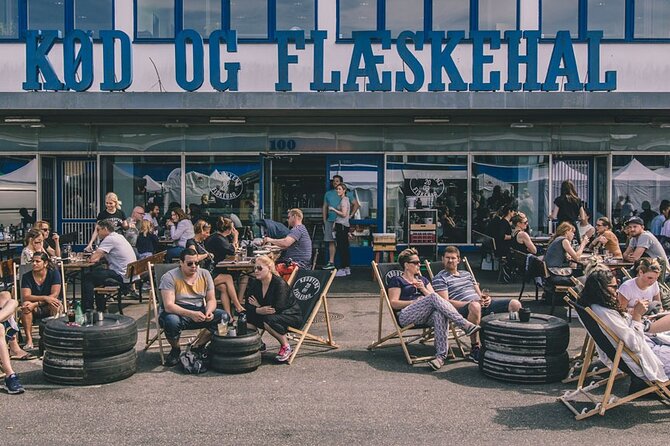
The tour then zooms in on Istedgade 31 and the story of Stjerne Radio, which opened in September 1942. Operated by Carl Munck and JK Søndergård, it helped relay English BBC radio broadcasts through loudspeakers. That mattered because it gave people access to information when information control was a real threat.
This stop changes the way you look at a building. It’s not just an address, it’s a piece of a communication system built in wartime. If you care about how ordinary tech choices become life-changing tools, this is a highlight.
Meatpacking District, Oksnehallen, and the city’s old market muscle
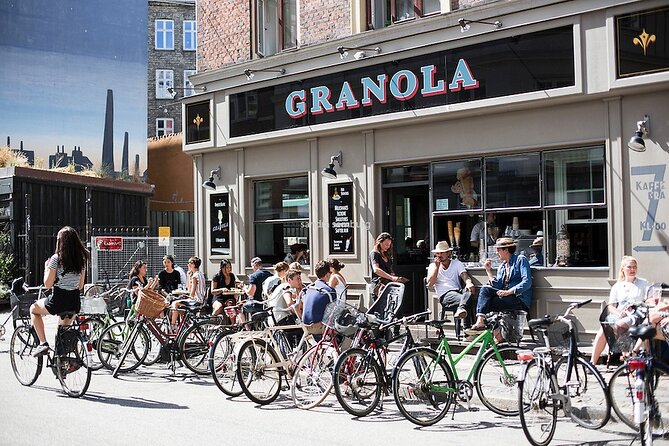
After the resistance chapter, the route moves toward the Meatpacking District. This part is about contrast. You get a revitalized industrial area today known for trendy dining and energetic nightlife, but you’re not leaving the past behind.
You visit Oksnehallen, an exhibition space inside an old market structure. Built in 1891, it was designed to hold merchant offices and had capacity for 1,600 cattle. The market stayed in use until the White Zone opened in the 1950s.
Then there’s Halmtorvet, Copenhagen’s haymarket. It originally sat inside the western city gate area where City Hall Square is today, then closed on January 1, 1888 and moved outside the new livestock market opened in 1879. Market days were Wednesday and Saturday, and loads of hay and straw went out to cattle and horse stables around the city.
If you like practical history, these stops are gold. They show how food supply chains shaped districts, and how those same buildings later became flexible space for culture.
Men’s Home and Maria Church, social support built into the map
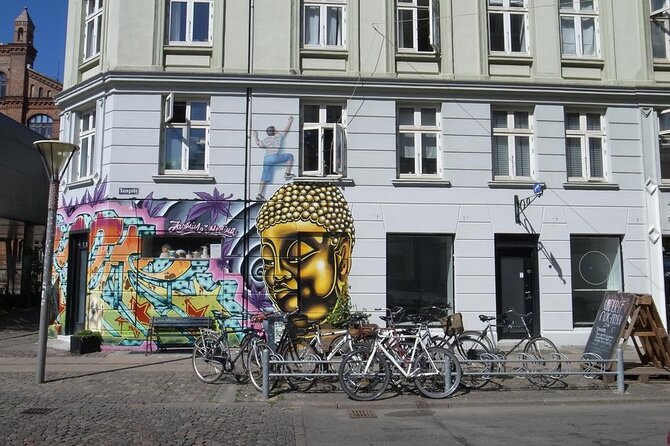
In this route, compassion is treated as part of the city, not a side note.
You’ll pass the Men’s Home for homeless, established in 1910, a private organization subsidized by the Danish state. The stated aim is to help homeless and vulnerable people use their own resources to build a good life and contribute to a diverse society.
Then you visit Maria Church, a small church opened in 1909 that today serves as a shelter for homeless people, families in need, and socially marginalized groups. The tour notes its active neighborhood social involvement and its support for people including vulnerable groups such as illegal immigrants, drug addicts, prostitutes, and people whose lives are criminalized.
Even when the stop time is short, the tour frames these institutions as working parts of local life. If you want Copenhagen that doesn’t ignore hard realities, you’ll appreciate this section.
København H and Knippelsbro, the crossing into Christianshavn
After Vesterbro, the tour makes a big logical shift toward Christianshavn.
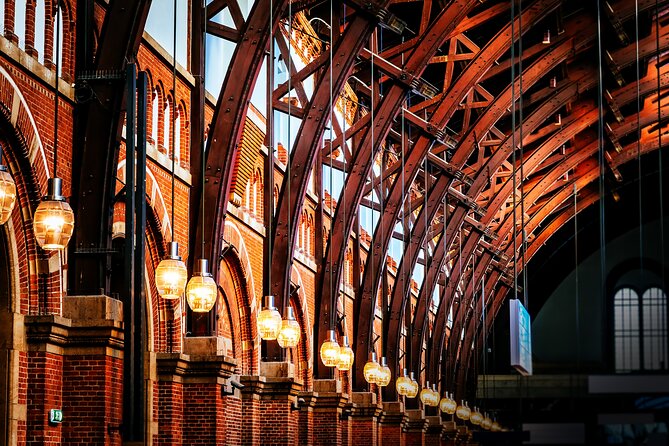
København H is a stop worth understanding even from the outside. Built in 1911 and inspired by architectural style from the town hall building, it’s Denmark’s largest railway station. The tour gives you the scale with 7 platforms and 13 tracks.
Then you reach Knippelsbro, a 115-meter drawbridge built in 1937 connecting Copenhagen with the island of Christianshavn. The name comes from Hans Knip, who operated the bridge and collected tolls from passing ships in 1641, and lived with his family on the bridge.
This is where the walk starts to feel like an island intro. You’re crossing not just water, but a different rhythm of Copenhagen.
Christians Kirke, Strandgade 4, and Asiatisk Plads
Christians Kirke is rococo-style, built between 1754 and 1759. It was originally called Frederik’s German Church, named after Frederick V, and served the German-speaking congregation who wanted their own church.
Then you get to Strandgade 4, a building from the 1780s. It used to house the DieselHouse Museum, which told the story of B&W starting back in 1843 with a one-man smithing workshop. Later, B&W grew into one of Denmark’s largest workplaces and held that title long after other companies changed shape, finally linked to today’s MAN Energy Solutions. (The museum part is noted as having moved, so you’ll mainly focus on the industrial story tied to the site.)
Asiatisk Plads is another meaning-heavy stop. It was the base of the Danish Asia Company from 1732 to 1843, and today it’s associated with the Ministry of Foreign Affairs and convention center. It’s a reminder that Copenhagen’s role was not only local and regional, it was trade connected.
Sankt Annae Kirke and the old house rows
Back on the Christianshavn side, you get to see listed buildings from the 1600s and 1700s. Sankt Annae Kirke is the anchor point, and the tour calls out rows of houses including numbers 8 to 22 with remains from some of the oldest houses in Copenhagen built around 1650. It also highlights number 14 as the best preserved in that row.
Wildersgade gets you the street texture. It dates to the founding of Christianshavn, around 1617 to 1622, and is today a quiet residential, cobblestone lane with mansions, old houses, and warehouses from the 1700s to 1800s.
A small note on why I think this matters: these are exactly the kinds of streets where your eyes need training. The tour gives you the training fast.
Wilders Plads, naval hospice history, and the defense zone idea
The route includes Wilders Plads, which the tour frames as a former busy market square now designed for relaxation with water views. It also points out an especially expensive marina, with access limited to yacht club members.
You’ll also see the Wilders Plads 10 building, a two-story timber-framed house built in 1736 that originally served as a sailmaker’s workshop plus housing.
Nearby, you’ll pass a big yellow neoclassical building built 1754 to 1756 that is listed. It was used as a naval hospice and later housed the Danish Naval Museum, Orlogsmuseet, until 2016.
And the tour connects these sights to a larger idea: Christian IV created defense zones to close the ring of protection of the capital and prevent an attack by the Swedes. It’s a helpful mental map. Suddenly, the city’s shape makes sense in a strategic way, not just a pretty way.
Church of Our Saviour and the climb you might want
Church of Our Saviour is baroque and famous for its twisted spire, including an external spiral staircase that you can climb to the top. The tour notes it’s a living parish church for about 8,000 people, so it is not an abandoned monument.
If you want a photo, a view, or just the satisfaction of seeing how the architecture looks from different angles, this is where you might slow your pace. The staircase detail also makes the stop feel more active, like you could choose to do more with it.
Freetown Christiania: context first, then your own choice
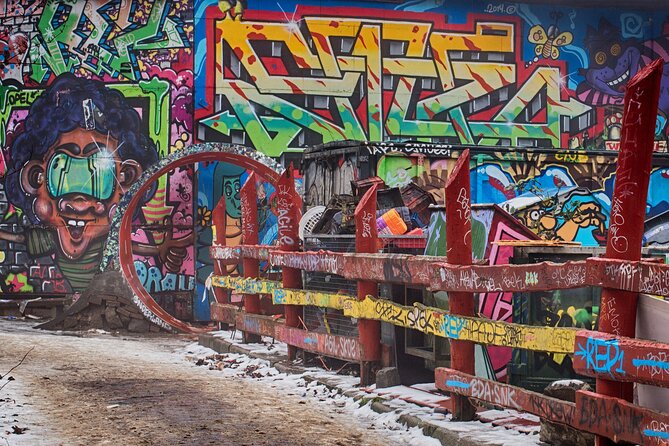
The last big chapter is Freetown Christiania, a partially self-governed neighborhood created in 1971 when a group of hippies protested the lack of housing on military land abandoned by the Danish army.
The tour shares that Christiania is about 34 hectares with around 1,000 residents, and it’s also described as one of Copenhagen’s most visited places, with an estimate of half a million tourists per year. The tour also clearly states a key limitation: the guide will not go into Christiania, because they’re not allowed.
That limitation is not a dealbreaker. In fact, it can work in your favor. You get the essentials first, then you decide how you want to experience the neighborhood. If you love community stories, you can spend extra time there. If you prefer your time focused on architecture and street history, you’ll still get value from the context you receive right before you enter the car-free zone.
Price and what $147.96 buys you in real terms
At $147.96 per person, this is not a bargain-bucket option. But it’s also not just “a guide walking next to you.”
You’re paying for:
- A private format (only your group, not a mixed crowd)
- A route built around meaningful stops you might skip or miss on your own
- Metro tickets included
- Admission tickets that are listed as free for the stops on the route
- Optional add-ons depending on the option you choose, including a local tasting and a drink in a traditional restaurant in the full option
In other words, the value comes from time saved and context gained. Copenhagen is easy to wander. It’s harder to wander with a clear understanding of why a street name, a wall, or a church matters. This tour does that work for you, so you’re not just collecting locations, you’re collecting connections.
One thing to keep your expectations clean: the tasting is a short stop, not a full food tour. If you want a multi-course meal crawl, you’ll likely want a separate food-focused outing.
Small practical tips for a smooth walk
You’ll be walking for about half a day. The stops are short, but you still want comfort.
- Bring comfortable shoes, because cobblestones and older street layouts can add up fast.
- If you’re the type who likes to stop for photos and read plaques, build in a little buffer for extra time.
- Rain is treated casually, the tour is not canceled in rain, so a light layer helps.
- Remember the Christiania rule, plan your time knowing you’ll explore it without the guide inside.
Also, this route is offered with mobile tickets and is near public transportation. That helps if you want to adjust your day before or after.
Should you book Copenhagen Alternative Private Tour: Vesterbro and Christianshavn?
I’d book it if you want Copenhagen that feels lived-in and explained. This is for you if you like neighborhood history, WWII details, and street-level stories that link architecture to real people. It’s especially good when you want a private guide who can answer questions and tailor the pace.
I would skip it or pair it differently if you’re only after the classic highlights, or if you’re expecting a food-focused tour. The tasting is part of the experience, but the core is neighborhood story and urban meaning.
If you want one solid way to see two sides of Copenhagen without getting lost in trivia, this private walk is a strong choice, and it’s the kind of tour where a great guide can turn a normal afternoon into a real understanding of the city.
The latest around Copenhagen
- Copenhagen: Guided Tour of Vesterbro and Christianshavn★ 5.0 · 1 review
- Stevn Klint UNESCO Heritage Tour and Vikingborg Fort.★ 5.0 · 1 review
- Historical Pod Walk Tour on the Slaves of Copenhagen★ 5.0 · 1 review
- Copenhagen Old Town, Nyhavn, Canal Walking Tour & Christiana★ 5.0 · 1 review
- Queer Copenhagen Historical Tour★ 5.0 · 1 review
- Castle Island’s Royal History: A Self-Guided Audio Tour of Slotsholmen★ 5.0 · 1 review
Freetown Christiania Walks, compared.
Private Hippies & Christianshavn Politically Incorrect Tour
Read our review →
Copenhagen & Christiania : Guided Bike Tour in French
Read our review →
1.5-hour Private Walking Tour of Christianshavn
Read our review →
Copenhagen Christiania: Hidden Stories Self-Guided Adventure
Read our review →
Copenhagen Christiania and Christianshavn Guided Walking Tour
Read our review →
Browse the lists this tour appears in