

Reviewed · SELF-GUIDED TOURS
Aarhus Mystery Quest: Outdoor Exploration Game and Tour
Aarhus has a fun side, and this game uses it well. You get 14 puzzle challenges tied to real landmarks, solved with a built-in GPS map while you wander the city at your own pace. I like that it is self-guided instead of waiting around for a live guide, but you should plan for one drawback: in winter, snowy and icy sidewalks can make phone-based navigation and group coordination harder.
Here is what makes it genuinely worth your time: the route is built around Aarhus’s mix of old and new, from Aarhus Cathedral to modern waterfront art. You’ll solve riddles at each stop, then move on as the mystery storyline carries you onward. If you hate “screen-led” walking, this may feel a bit too app-driven.
One more practical note. The experience is priced at $10.91 per person for about 1 hour 30 minutes, and it works best when your group stays together and checks the app often. I’d suggest booking ahead, because it is commonly reserved about 15 days in advance.
In This Review
- Key highlights before you go
- A self-guided Aarhus game that still feels like a real walk
- Price and time: why $10.91 can make sense for 90 minutes
- Stop 1: Dokk1, Aarhus’s futuristic library and clue hub
- Poseidon in Aarhus: the sea god statue puzzle
- Toldboden, the harbor customs past, and merchant-style riddles
- Endless Connection: modern waterfront sculpture, then a puzzle that follows the shape
- Aarhus Cathedral and the King Christian X statue in one historical arc
- Aarhus Theatre: when performing arts become part of the mystery
- Mølleparken and Møllestien: park, murals, and a postcard lane
- Vor Frue Kirke crypt layers and Ismael’s final question
- Practical tips that will make or break the experience
- Who should book this mystery quest in Aarhus
- Should you book Aarhus Mystery Quest?
- FAQ
- How long is the Aarhus Mystery Quest?
- Do I need a live guide?
- What language is the quest offered in?
- Where do I start and end the quest?
- Is there admission included for Dokk1?
- Is free cancellation available?
Key highlights before you go
- Self-guided GPS puzzle format: no live tour guide, just your mobile access code and a navigation map
- 14 themed challenges: multiple puzzles across major landmarks rather than one big riddle
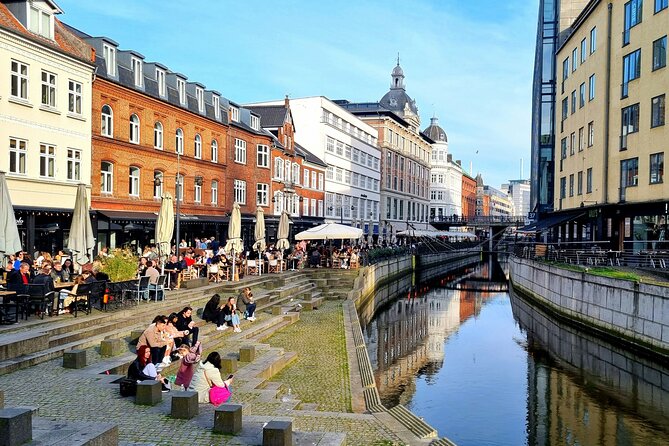
- Aarhus landmark variety: waterfront library, harbor art, cathedral, theatre, old lanes, and church crypt history
- Flexible pace: you can pause and resume any time
- English available: the quest is offered in English
- Winter reality check: one review flagged extra trouble when snow and ice hit the route
A self-guided Aarhus game that still feels like a real walk
This is a private, group-only quest in Aarhus, built for outdoor exploration without a live guide. You start at Dokk1, then follow a mystery storyline that sends you from stop to stop. Instead of getting a lecture at each location, you focus on solving puzzles tied to what you can see around you.
The “tour” part comes from the structure. You are not just roaming. The app uses a GPS navigation map to move you along the route, and the story gives you a reason to look closely at details you might otherwise skip. That makes it great for people who want their sightseeing to feel active.
And because it is private, you can keep your group’s rhythm. One person can read clues out loud. Another can scan the landmark. If you pause for a coffee, you are not stuck waiting for someone’s schedule.
More routes to do without a guide in Aarhus:


Price and time: why $10.91 can make sense for 90 minutes
At $10.91 per person, this quest is priced like a low-cost add-on that can still fill an afternoon slot. The big value is not the price by itself. It is the package: about 1 hour 30 minutes of walking, 14 themed puzzle challenges, and built-in navigation.
A separate note that matters for value: Dokk1 is described as having admission ticket free within the quest flow. In plain terms, you are not paying extra just to access the location that opens the story.
There is also group discounts. If you are traveling with friends or family, it can drop the effective cost and make the experience feel like less of a splurge. And since it is booked about 15 days in advance on average, popular times can fill up, so I’d aim to lock in your slot earlier if your dates are fixed.
Stop 1: Dokk1, Aarhus’s futuristic library and clue hub
Your quest begins at Dokk1, the modern waterfront library and cultural hub. It is bold, architectural, and meant to be used, not just admired. The setting does a good job of shifting you into “mystery mode” right away.
In this first stretch, the puzzle is inspired by Dokk1’s design and secrets. You’re not just walking past glass and metal and calling it done. You are meant to notice the building’s layout and features, then use the clue you receive to solve a challenge.
Practical tip: give yourself a moment to orient. Dokk1 is a big, modern space, and if you rush, the first puzzle can feel harder than it needs to be. This is the part where your group’s phone skills matter most.
Poseidon in Aarhus: the sea god statue puzzle
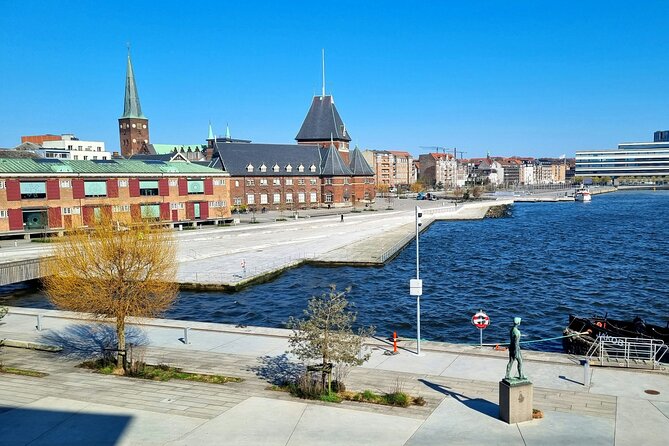
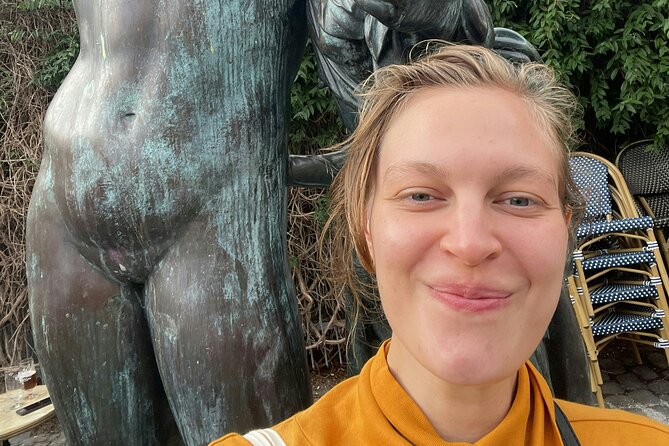
Next you head to a bronze statue of Poseidon, the ancient Greek god of the sea, raised into the everyday modern city. It is a fun contrast, because Denmark is not usually portrayed through classical mythology at street level. Here, public art becomes a story device.
The quest sends you there with cryptic clues, then challenges you to work with a riddle tied to Poseidon’s hidden tale. What I like about this stop is that it feels like a “local surprise.” You get to see an unexpected mythological figure, then use that curiosity to solve the next step.
Small caution: public art can be surrounded by people and movement. If your group splits, it is easy to lose time. Try to decide where everyone meets before you start reading the clue.
Even more Things to Do in Aarhus
- Aarhus Walking Tour: From Viking Village to Metropolis
★ 4.8 · 122 reviews - Street Art and Rooftops of Aarhus, Denmark
★ 5.0 · 62 reviews - Aarhus: Harbour Cruises with local guide
★ 4.5 · 53 reviews
Toldboden, the harbor customs past, and merchant-style riddles
From Poseidon you move toward Toldboden, a historic customs-house building with neoclassical charm and views over the harbor. This stop is about maritime trade and the city’s history as a gateway where goods, stories, and people arrived.
The puzzle here is described as connected to merchants, maps, and even the idea of smuggling. That theme matters. It signals that the quest is not only asking you to recognize a landmark. It is nudging you to think like a trader or investigator, piecing together hints the way someone would map a route.
This is a good stop to slow down. Harbor areas can be windy and change how you feel about standing still. If you do find yourself rushed, you’ll likely skim the clue and miss the puzzle’s intent.
Endless Connection: modern waterfront sculpture, then a puzzle that follows the shape
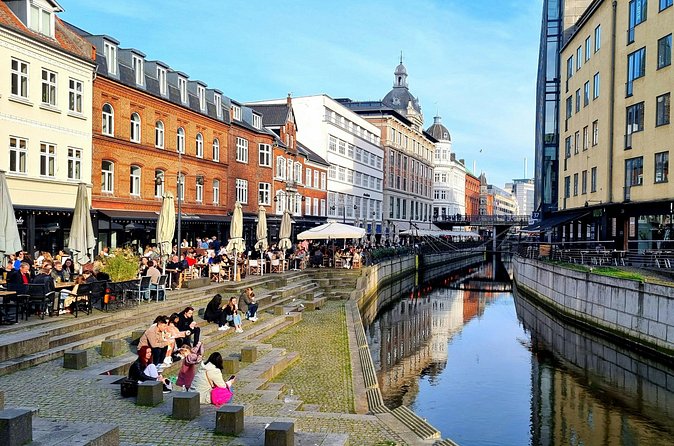
Then you reach Endless Connection, a modern sculpture near the harborfront that symbolizes unity and flow. It is the kind of artwork that invites you to pause, look again, and interpret what you think you are seeing.
The quest includes a puzzle woven into its looping form, with a hidden narrative tied to the sculpture. I like this stop because it changes the “vibe” of the quest. After earlier history-heavy places, you get a more abstract challenge.
Practical tip: don’t treat the sculpture like a fixed statue. If the clue feels confusing, rotate your position slightly. With public art, the angle can change what details you notice, and that can make the riddle easier.
Aarhus Cathedral and the King Christian X statue in one historical arc

The next big cultural moment is Aarhus Cathedral, described as the tallest and longest church in Denmark. It also has medieval frescoes and is tied to maritime legends and royal secrets. In the quest, you follow clever clues and solve a puzzle linked to the cathedral’s hidden past.
This stop is ideal for people who like old buildings and symbols. Cathedral puzzles tend to reward careful attention, because you are likely to be asked to connect the clue to physical details around the site.
Right in front of the cathedral area is the Rytterstatuen, the equestrian statue honoring King Christian X. In Aarhus, Christian X is remembered for quiet defiance during World War II and for daily rides through the city. The quest connects this monument to a riddle about his legacy.
Why this pairing works: it keeps the story moving through Danish identity. You go from medieval church atmosphere to a modern national memory told through bronze and posture.
Aarhus Theatre: when performing arts become part of the mystery
Next is Aarhus Theatre, an architectural and cultural landmark with performances since 1900. The quest frames it as a place where drama lives on and off the stage, including hidden backstage tales.
Here, you follow clues that lead to the theatre’s architectural beauty, then solve a puzzle tied to the theatre’s past. I like theatre stops in mystery games because they often hint at “behind the scenes” logic. Even if you do not know much about the building, your curiosity gets a nudge.
If you’re traveling with a group that includes someone who does not love puzzles, theatre can still win them over. The building itself gives you something visual to enjoy between clue checks.
Mølleparken and Møllestien: park, murals, and a postcard lane
After the theatre, the route turns toward Mølleparken, a green space along the Aarhus River. This park blends nature, street art, and hidden history, and it is tied to the memory of an old mill. The quest brings you along leafy paths to a puzzle that sits among trees and murals.
This is a good segment for a breather. Parks make the walking feel less like a chore. You also have more room to regroup and talk through the clues.
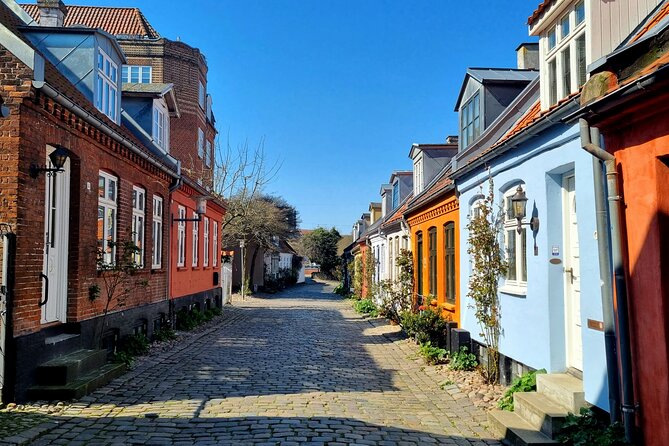
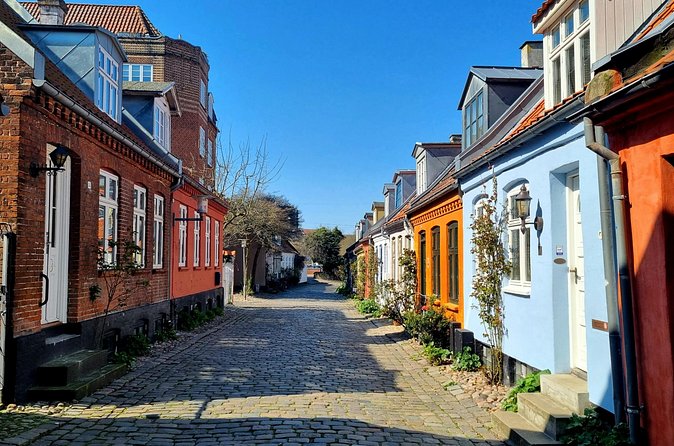
Then you move to Møllestien, a fairytale lane with colorful 18th-century houses and cobblestone charm, one of Aarhus’s most photographed and beloved streets. The quest uses a trail of clues to guide you through this pocket of the past.
The riddle here is inspired by hidden history behind the bright facades. This is one of the places where I’d recommend you take a real look at doorways, street angles, and the way the lane bends. Even small details can matter when a puzzle is built around place.
If you go in winter, cobblestones and ice can change footing fast. Take your time. The puzzle can wait.
Vor Frue Kirke crypt layers and Ismael’s final question
The quest continues to Vor Frue Kirke (Church of Our Lady), one of Aarhus’s oldest landmarks. The big hook is that it includes a crypt church built over a crypt said to be more than 1,000 years old. The quest treats the site like a multi-layer mystery, with clues leading you there and a puzzle tied to hidden layers and ancient secrets.
This stop is your “slow down and look down” moment. A crypt setting can make the air feel cooler and the space feel older. If your group is prone to rushing puzzles, this is the point where you’ll do best by taking it step by step.
Finally, the quest ends at Ismael, a sculpture by artist Lin Utzon. It is described as both human and abstract, inviting questions more than answers. The puzzle challenges you to decode its silent message, and then you finish your mystery storyline at Klostertorvet.
Ending with Ismael is a smart choice. It gives you closure that feels like art interpretation, not just “problem solved.” You can stand there for a minute and decide what you think the sculpture is communicating.
Practical tips that will make or break the experience
This is an app-led GPS quest, so a few practical habits make a big difference.
1) Keep your phones charged
The quest depends on mobile access and GPS navigation. Bring a power bank if you think your battery runs fast.
2) Don’t let the group drift
A winter-related review flagged that it can be tricky to coordinate everyone through the app. That makes sense. In a GPS quest, people naturally walk a little ahead. If you agree on a simple rule, like “everyone checks in before solving,” you prevent time loss.
3) Watch footing in snow and ice
That same winter feedback called out extra challenges when the ground is slippery. Aarhus can look picturesque and still be treacherous. Wear shoes with good grip and slow down on cobblestones.
4) Use the pause-and-resume flexibility
The quest is designed so you can pause and resume anytime. If you hit a weather window or need to warm up, you are not locked into a rigid schedule.
5) Be ready to read clues out loud
Riddles work better when someone reads clearly, and another person watches for the relevant detail. It helps the whole group participate.
Who should book this mystery quest in Aarhus
You’ll likely enjoy this if you like:
- Walking between famous Aarhus landmarks
- Puzzles that point you to details you might otherwise miss
- A light “story” structure without needing a live guide
- A time-limited outing around 90 minutes
It may be less ideal if:
- You want a traditional guided tour with a person explaining everything
- Your group hates using phones for navigation
- You plan to travel in harsh winter conditions without good walking gear
The good news is that it is English offered, most travelers can participate, and it is private for your group. That combination makes it flexible for couples, friends, and family groups that want a shared activity.
Should you book Aarhus Mystery Quest?
Yes, if you want a low-cost, puzzle-driven way to see Aarhus beyond the obvious photo stops. $10.91 per person for about 1.5 hours, plus 14 challenges and GPS guidance, is solid value when you enjoy hands-on discovery.
I would book it especially if you like mixing architecture, public art, and history into one walking route. And if you’re traveling in winter, plan for slower movement and tighter coordination, because slippery ground can turn a “fun challenge” into a frustrating one.
If that’s your vibe, this quest is an easy yes.
FAQ
How long is the Aarhus Mystery Quest?
The experience runs for about 1 hour 30 minutes.
Do I need a live guide?
No. It is a self-guided private activity with mobile access and GPS navigation, not a live tour guide.
What language is the quest offered in?
It is offered in English.
Where do I start and end the quest?
You start at Dokk1, Hack Kampmanns Plads 2, 8000 Aarhus Centrum, and you end at Ismael, Klostertorvet, 8000 Aarhus.
Is there admission included for Dokk1?
Dokk1 is listed with admission ticket free within the quest flow.
Is free cancellation available?
Yes. You can cancel up to 24 hours in advance for a full refund, based on local experience time.
The latest around Aarhus
- Explore the Instaworthy Spots of Aarhus with a Local★ 5.0 · 1 review
- Aarhus Private Transfer from Aarhus (AAR) Airport to City centre★ 5.0 · 2 reviews
- Aarhus: Express Walk with a Local in 60 minutes★ 4.8 · 3 reviews
- Aarhus: Insta-Perfect Walk with a Local★ 4.9 · 4 reviews
- Aarhus Like a Local: Customized Private Tour★ 5.0 · 4 reviews
- Self-guided Mystery Tour by Aarhus River★ 3.5 · 4 reviews
Self-Guided Tours, compared.
The Ancient Viking Stronghold of Aros: A Self-Guided Audio Tour in Aarhus
Read our review →
Copenhagen Little Mermaid Exploration Game and Self-Guided Tour
Read our review →
Half Day Self-Guided Audio Walking Private Tour in Copenhagen
Read our review →
Monstour: A Self-Guided Audio Tour of Danish Folk Legends
Read our review →
Copenhagen Self-Guided Murder Mystery Tour by the Round Tower
Read our review →
Copenhagen Christiania: Hidden Stories Self-Guided Adventure
Read our review →
Copenhagen Royal Conspiracy Exploration Game and Tour
Read our review →Browse the lists this tour appears in